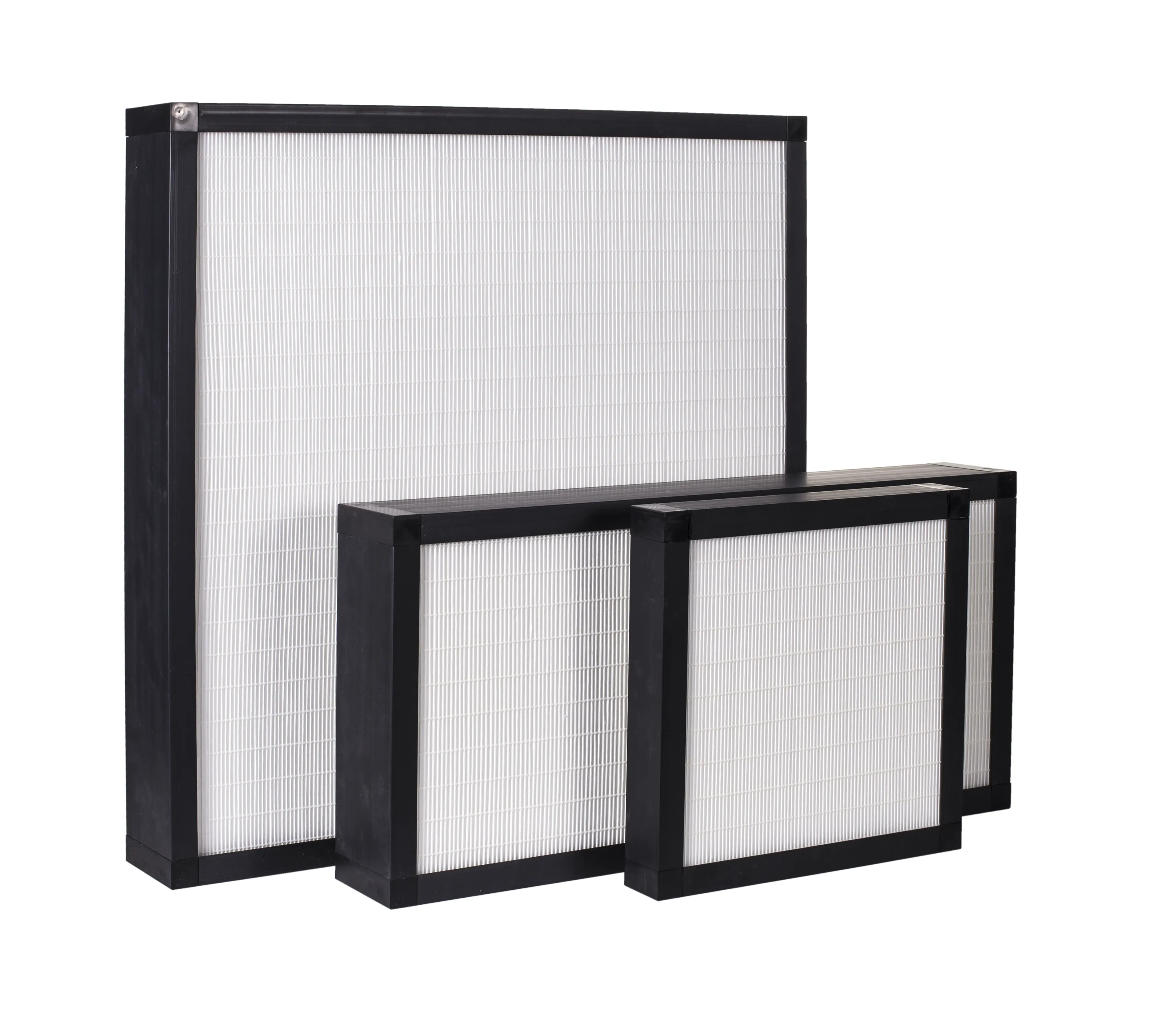
What Is a HEPA Filter? Industrial Air Filtration Guide
Clean air is a technical requirement in many industrial, commercial and controlled environments. In cleanrooms, hospitals, laboratories, pharmaceutical production areas, food processing facilities, HVAC systems and sensitive manufacturing plants, airborne particles can directly affect product quality, process safety, equipment performance and indoor air hygiene. For this reason, HEPA filters are selected not only as air cleaning components, but also as critical parts of a complete air filtration strategy.
As an industrial air filter manufacturer in Turkey, Safe Air produces HEPA filter solutions for different application areas, including cleanrooms, healthcare facilities, laboratories, industrial HVAC systems and OEM projects. This guide explains what a HEPA filter is, how it works, where it is used and which technical criteria should be considered before selecting a product or requesting a quotation.
What Is a HEPA Filter?
HEPA stands for High-Efficiency Particulate Air. A HEPA filter is designed to capture very fine airborne particles by forcing air through a dense filter media. Unlike standard coarse or medium-efficiency filters, HEPA filters are used where high particle retention is required and where filtration performance must be evaluated according to the application, filter class and installation conditions.
In professional projects, the term “HEPA filter” should not be evaluated only as a general product name. Purchasing teams, engineers and facility managers should check the required filter class, airflow, pressure drop, frame type, sealing method, installation dimensions and documentation needs before selecting the correct filter.
Safe Air manufactures different HEPA filter configurations for project-based requirements, including H13 HEPA filters, H14 HEPA filters, compact HEPA filters, terminal HEPA filters, gel seal HEPA filters and custom-sized HEPA filter solutions.
How Does a HEPA Filter Work?
HEPA filters remove airborne particles through a combination of physical filtration mechanisms. The filter media is made of fine fibers arranged to capture particles of different sizes as air passes through the filter.
Main Filtration Mechanisms
- Interception: Particles following the air stream come close to the filter fibers and are retained on the media surface.
- Impaction: Larger particles cannot follow the airflow path around the fibers and collide with the filter media.
- Diffusion: Very small particles move irregularly within the airflow and are captured as they interact with the fiber structure.
These mechanisms work together to help HEPA filters capture fine dust, aerosols, pollen, spores and other airborne particulate matter. The actual performance of a HEPA filter depends on its filter class, media quality, construction, sealing method and installation conditions.
What Types of Particles Can HEPA Filters Capture?
HEPA filters are used to reduce many common airborne particles found in indoor and industrial environments. Depending on the application and filter class, they can help capture:
- Pollen
- Fine dust
- Mold spores
- Pet dander
- Smoke particles
- Airborne particles generated by people, processes or ventilation systems
This makes HEPA filters useful in areas where particle control, air hygiene and system protection are important.
Benefits for Allergy and Asthma-Sensitive Environments
HEPA filtration can help reduce airborne allergens such as pollen, dust and pet dander. In indoor environments, this may support better air quality and help reduce exposure to particles that can trigger allergy or asthma-related discomfort.
HEPA filters should be considered as part of a broader indoor air quality strategy. Source control, proper ventilation, regular cleaning and suitable filter maintenance are also important for reducing airborne allergen levels.
What About Viruses and Bacteria?
HEPA filters are particle filters. While some microorganisms may be very small, they are often carried in droplets, aerosols or particles that can be captured by high-efficiency filtration systems. For this reason, HEPA filters are commonly used in healthcare, laboratory and controlled ventilation applications.
However, HEPA filters should not be treated as the only solution for infection control. In critical environments, filtration should be evaluated together with ventilation design, airflow direction, air changes, maintenance and hygiene procedures.
Where Are Industrial HEPA Filters Used?
HEPA filters are selected for environments where standard ventilation filters are not sufficient. The correct product type may vary depending on the cleanliness requirement, airflow rate, system design and risk level of the application.
Cleanrooms
In cleanroom applications, HEPA filters are used to control airborne particle concentration and support stable environmental conditions. They are commonly preferred in pharmaceutical production, biotechnology, electronics manufacturing, semiconductor facilities and other controlled production areas.
Hospitals and Healthcare Facilities
HEPA filters can be used in operating rooms, isolation areas, intensive care units, laboratories and medical ventilation systems where air hygiene is critical. In these applications, filter selection should be made according to the project specification, airflow requirements and required documentation.
Pharmaceutical and Laboratory Applications
Pharmaceutical facilities and laboratories often require high-efficiency filtration to protect processes, products, personnel and working environments. Depending on the project, H13 or H14 HEPA filters, terminal HEPA filters or gel seal HEPA filters may be preferred.
Industrial HVAC Systems
In commercial and industrial HVAC systems, HEPA filters may be used where high filtration performance is required after pre-filtration stages. Offices, production plants, technical rooms, data centers and sensitive equipment areas may require different HEPA filter designs depending on airflow and system pressure capacity.
OEM and Custom Equipment Manufacturing
Equipment manufacturers may require custom HEPA filters designed according to specific dimensions, airflow values, frame materials and installation conditions. Safe Air supports OEM HEPA filter manufacturing and custom HEPA filter production for project-based requirements.
HEPA Filter Types Used in Industrial Projects
Not every HEPA filter has the same construction. The right filter type should be selected according to the installation area, sealing requirement, air handling unit design and maintenance conditions.
| HEPA Filter Type | Typical Application | Selection Focus |
|---|---|---|
| H13 HEPA Filter | Cleanrooms, laboratories, HVAC systems, healthcare areas | High-efficiency filtration with balanced pressure drop |
| H14 HEPA Filter | Critical cleanrooms, pharmaceutical areas, sensitive processes | Higher filtration requirement and project-specific documentation |
| Gel Seal HEPA Filter | Cleanroom ceiling systems and leak-sensitive installations | Reliable sealing performance and controlled installation |
| Terminal HEPA Filter | Final filtration points in controlled ventilation systems | Air distribution, final filtration and easy service access |
| Custom HEPA Filter | OEM systems, replacement projects, special equipment | Custom dimensions, frame material and airflow compatibility |
H13 vs H14 HEPA Filters
H13 and H14 are both high-efficiency HEPA filter classes used in professional air filtration systems. The correct choice depends on the required cleanliness level, project specification, installation type and operating conditions.
H13 HEPA filters are commonly selected for cleanroom, healthcare, laboratory and HVAC applications where high-efficiency filtration is required. H14 HEPA filters are generally preferred in more critical environments where a higher level of particle retention is specified.
Choosing between H13 and H14 should not be based only on the highest possible class. A higher filter class may also affect pressure drop, fan performance, energy consumption and maintenance planning. For this reason, filter selection should be evaluated together with the air handling system and the technical requirements of the project.
Key Criteria When Selecting a HEPA Filter
- Filter class: Define whether the project requires H13, H14, ULPA or another filtration level.
- Dimensions: Specify width, height and depth accurately, especially for replacement filters and OEM projects.
- Airflow: Determine the required airflow value to avoid incorrect pressure drop and system performance problems.
- Pressure drop: Check initial pressure drop and recommended final pressure drop according to system capacity.
- Frame material: Select MDF, aluminium, galvanized steel, stainless steel or other frame materials according to application needs.
- Seal type: Choose gasket seal or gel seal depending on leakage control and installation requirements.
- Operating conditions: Consider temperature, humidity, chemical exposure and maintenance frequency.
- Documentation: Specify whether a technical datasheet, test report or project-specific documentation is required.
Common Mistakes in HEPA Filter Selection
- Selecting a HEPA filter only by size without checking airflow and pressure drop.
- Choosing H14 filters where the system fan capacity is not suitable for the pressure resistance.
- Ignoring sealing requirements in cleanroom and terminal filtration applications.
- Using standard filters in OEM systems that require custom dimensions or special frame designs.
- Requesting products without defining the required filter class, test documentation or application area.
Safe Air HEPA Filter Manufacturing Capabilities
Safe Air manufactures industrial air filter solutions for different sectors and technical requirements. The product range includes HEPA filters, H13 and H14 HEPA filters, ULPA filters, compact filters, panel filters, bag filters, activated carbon filters, V-bank filters, gel seal HEPA filters, terminal HEPA filters and custom air filters.
As a HEPA filter manufacturer, Safe Air supports standard product requirements as well as custom air filter manufacturing for special dimensions, OEM projects and industrial HVAC systems. This makes Safe Air a suitable manufacturing partner for purchasing departments, engineers, distributors, OEM companies and facility managers looking for project-based filtration solutions.
What Information Should You Provide for a HEPA Filter Quotation?
- Application area
- Required filter class
- Width, height and depth
- Required airflow
- Quantity
- Frame material preference
- Gasket or gel seal requirement
- Operating temperature and humidity conditions
- Technical drawing, if available
- Test report or documentation requirement
- Target delivery date
These details help the manufacturer evaluate the correct filter configuration and reduce the risk of product mismatch during installation.
HEPA filters are critical components in controlled air filtration systems. From cleanrooms and hospitals to laboratories, pharmaceutical facilities, HVAC systems and OEM equipment, the right HEPA filter helps support air quality, process reliability and technical compatibility with project requirements.
Safe Air provides industrial HEPA filter solutions for standard and custom requirements. If you need H13 HEPA filters, H14 HEPA filters, gel seal HEPA filters, terminal HEPA filters or custom HEPA filter manufacturing, you can contact Safe Air with your project details and request a technical quotation.
Frequently Asked Questions
A HEPA filter is a high-efficiency particulate air filter that forces air through dense fibrous media to capture airborne particles. In industrial use it is treated as part of a complete air filtration strategy, not as a stand-alone air cleaning component.
They are used in cleanrooms, hospitals and healthcare facilities, pharmaceutical and laboratory applications, industrial HVAC systems, and in OEM or custom equipment manufacturing.
Selection is based on the application area, the required filter class, airflow, pressure drop, installation dimensions and sealing configuration. Dimensions alone are not sufficient to determine whether a filter is suitable.
Both are HEPA classes, but H14 provides a higher particle capture efficiency at MPPS than H13. The higher class is not automatically the right choice for every air handling system.
The application area, required filter class, nominal airflow, installation dimensions, frame material and sealing type should be specified. With these details a technically suitable filter can be offered instead of a general product recommendation.