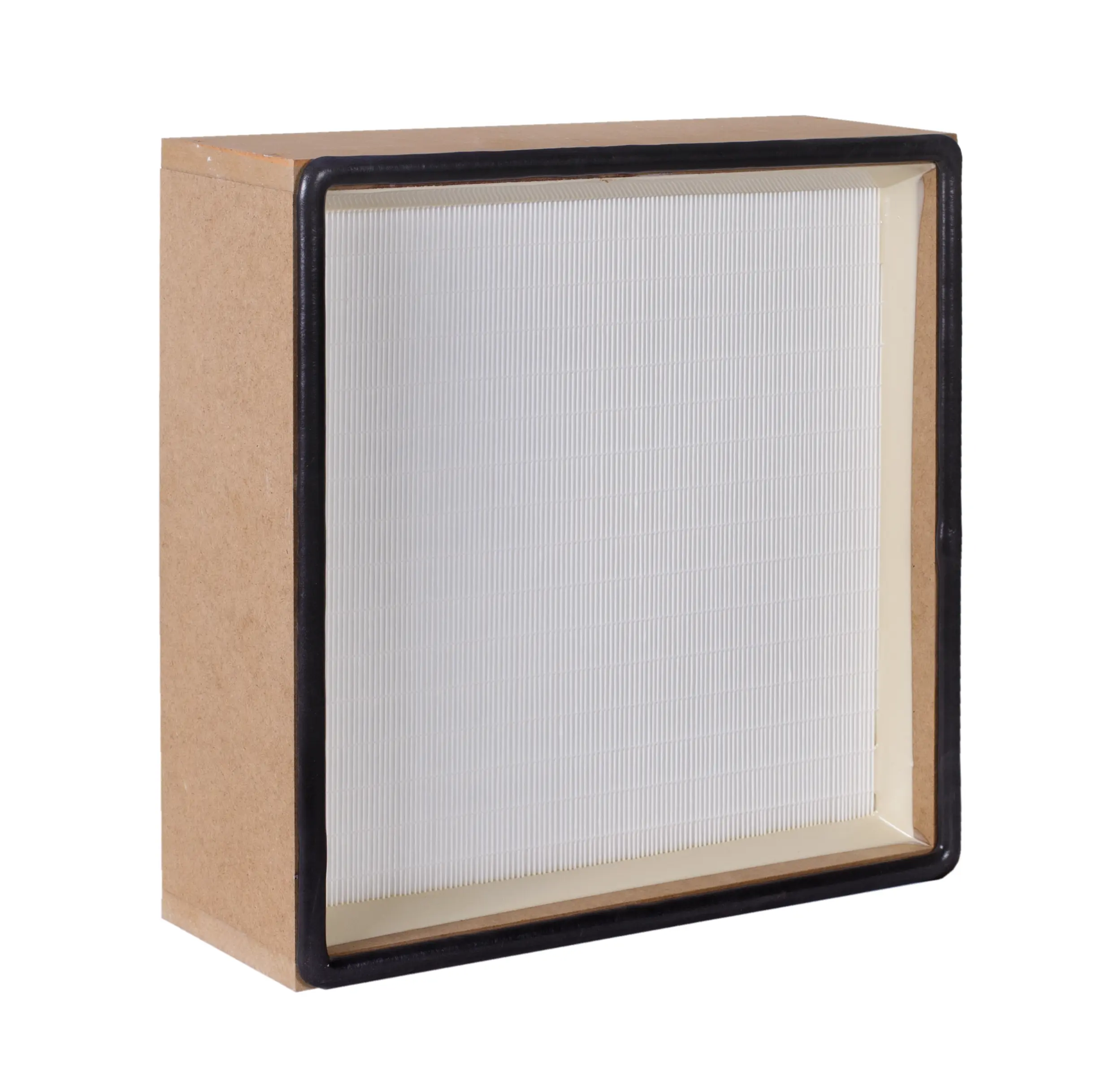
Hepa Terminal Filters-78 MM MDF Frame
Safe Air 78mm MDF Frame HEPA Filters offer durable and efficient filtration, capturing ultra-fine particles to maintain superior air quality. The MDF frame provides stability and reliability, ideal for sensitive applications.
Check out the product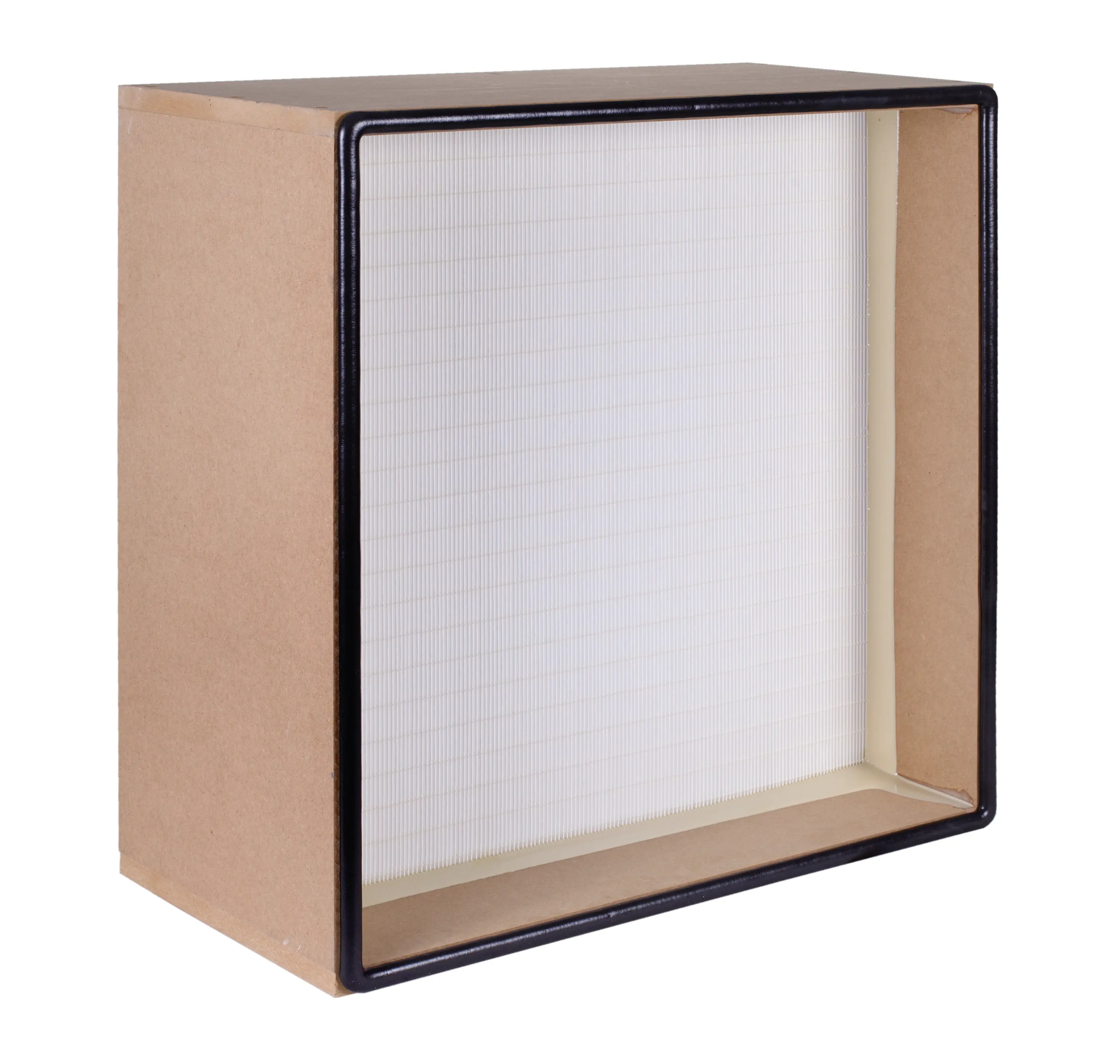
Hepa Terminal Filters-149 MM MDF Frame
Safe Air 149mm MDF Frame HEPA Filters offer reliable solutions for environments requiring precise air filtration.
Check out the product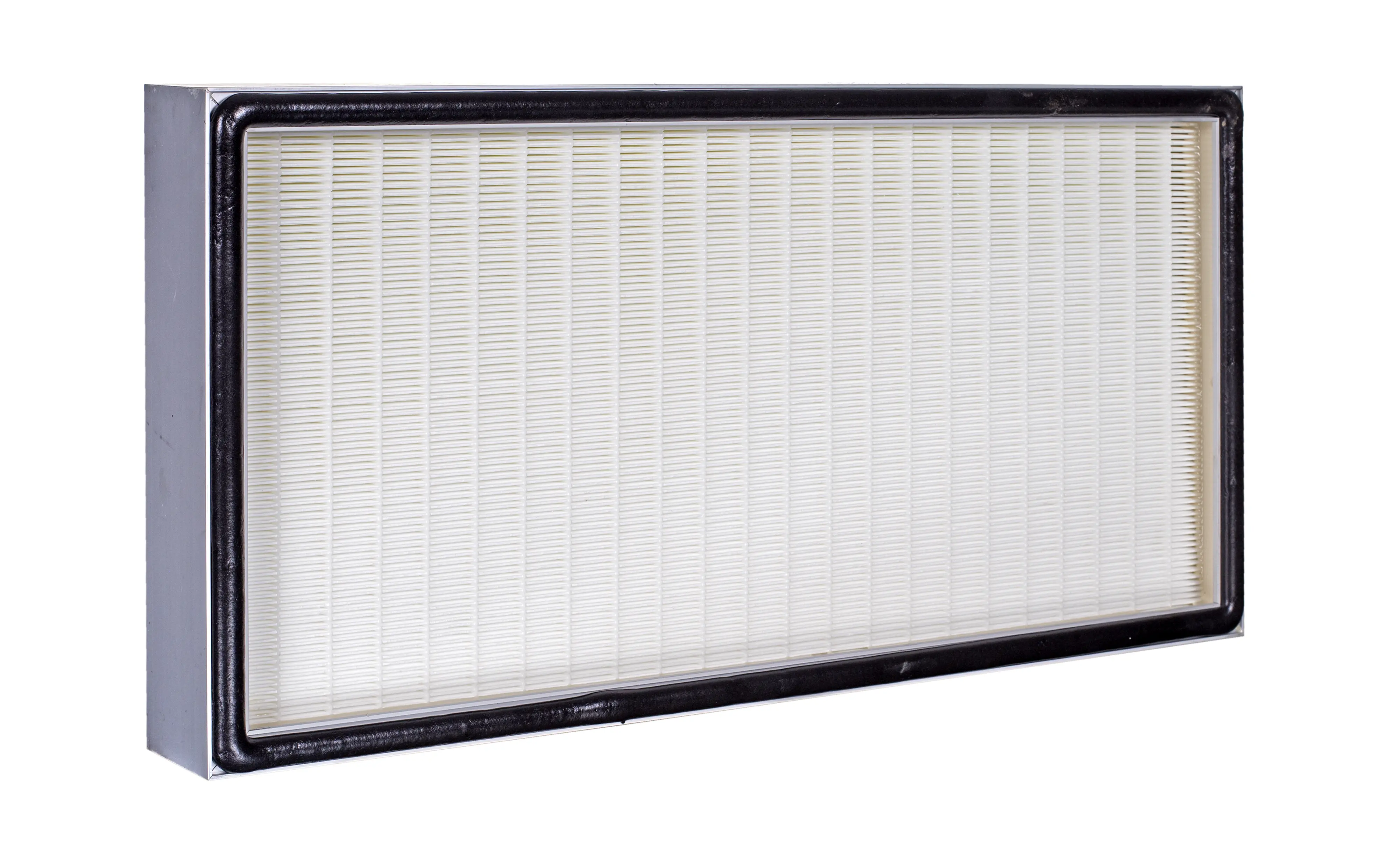
Hepa Terminal Filters-69 MM Aluminium Frame
Safe Air 69mm Aluminum Frame HEPA Filters offer advanced filtration solutions designed to improve air quality by effectively capturing fine particles.
Check out the product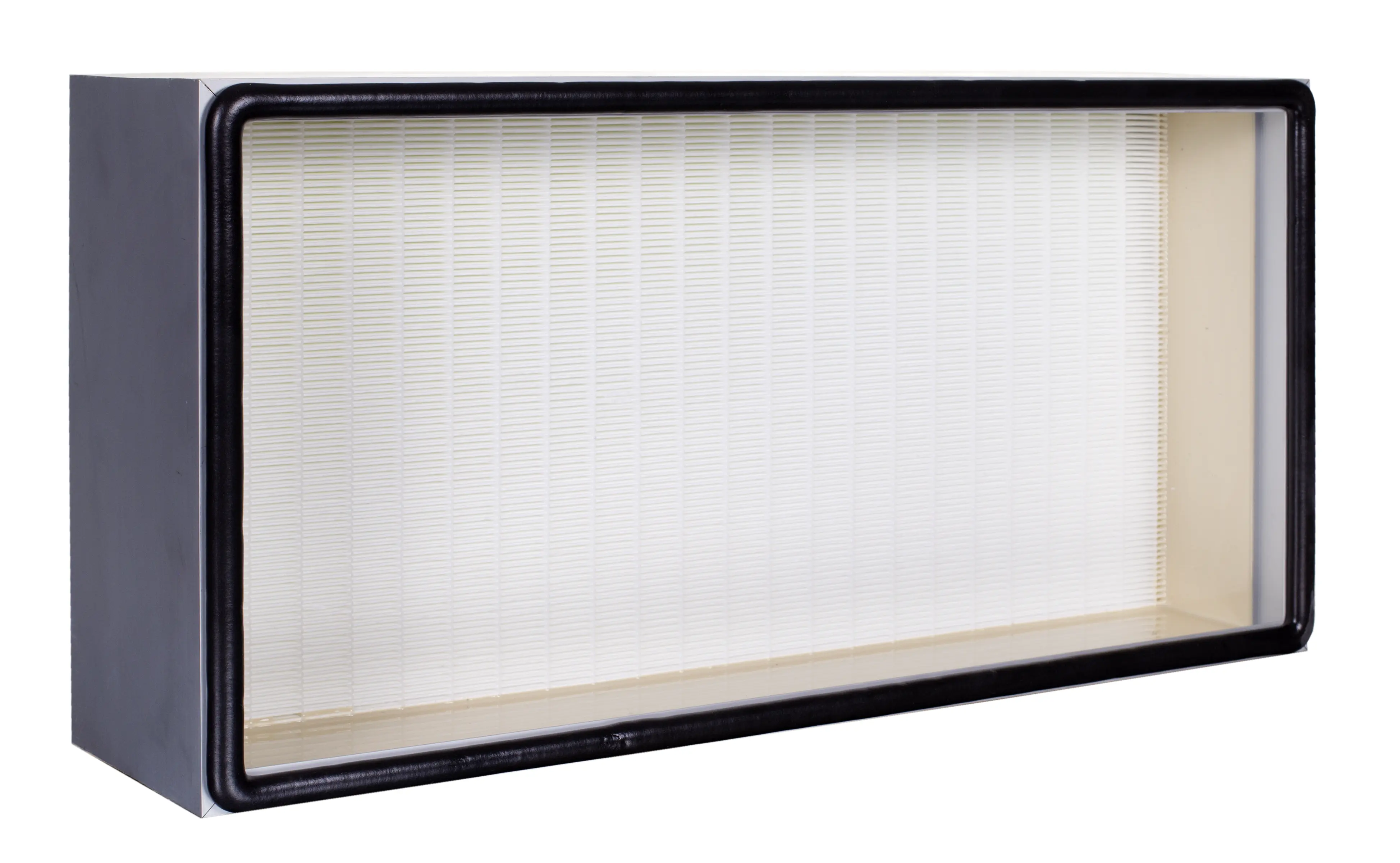
Hepa Terminal-78MM Aluminium Frame
Safe Air 78mm Aluminum Frame HEPA Filters provide advanced air purification with a durable, corrosion-resistant aluminum frame that ensures long-lasting performance.
Check out the product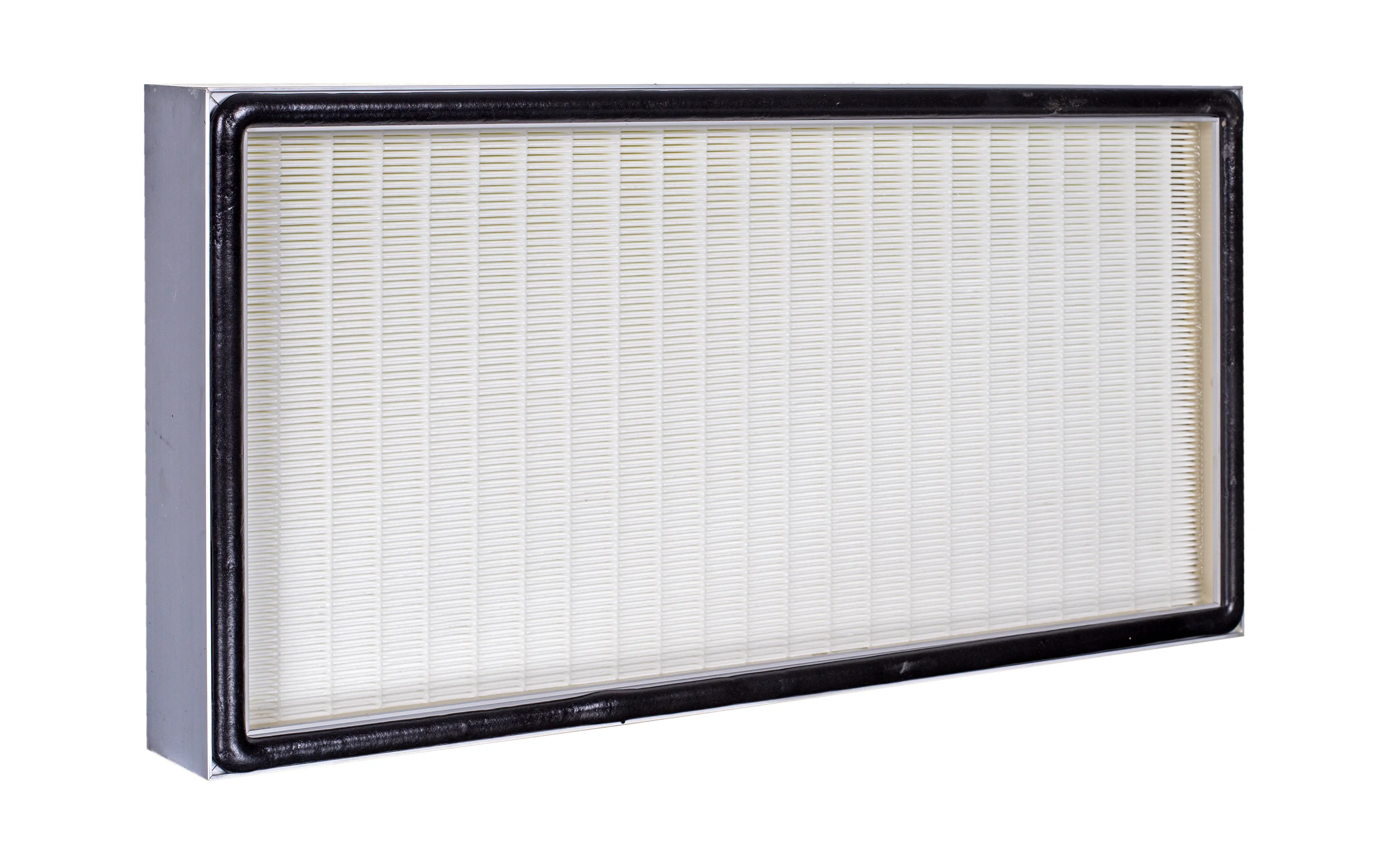
Hepa Filters-149 MM Aluminium Frame
Safe Air 149mm Aluminum Frame HEPA Filters provide outstanding air quality, thanks to a high dust-holding capacity and a durable aluminum frame.
Check out the product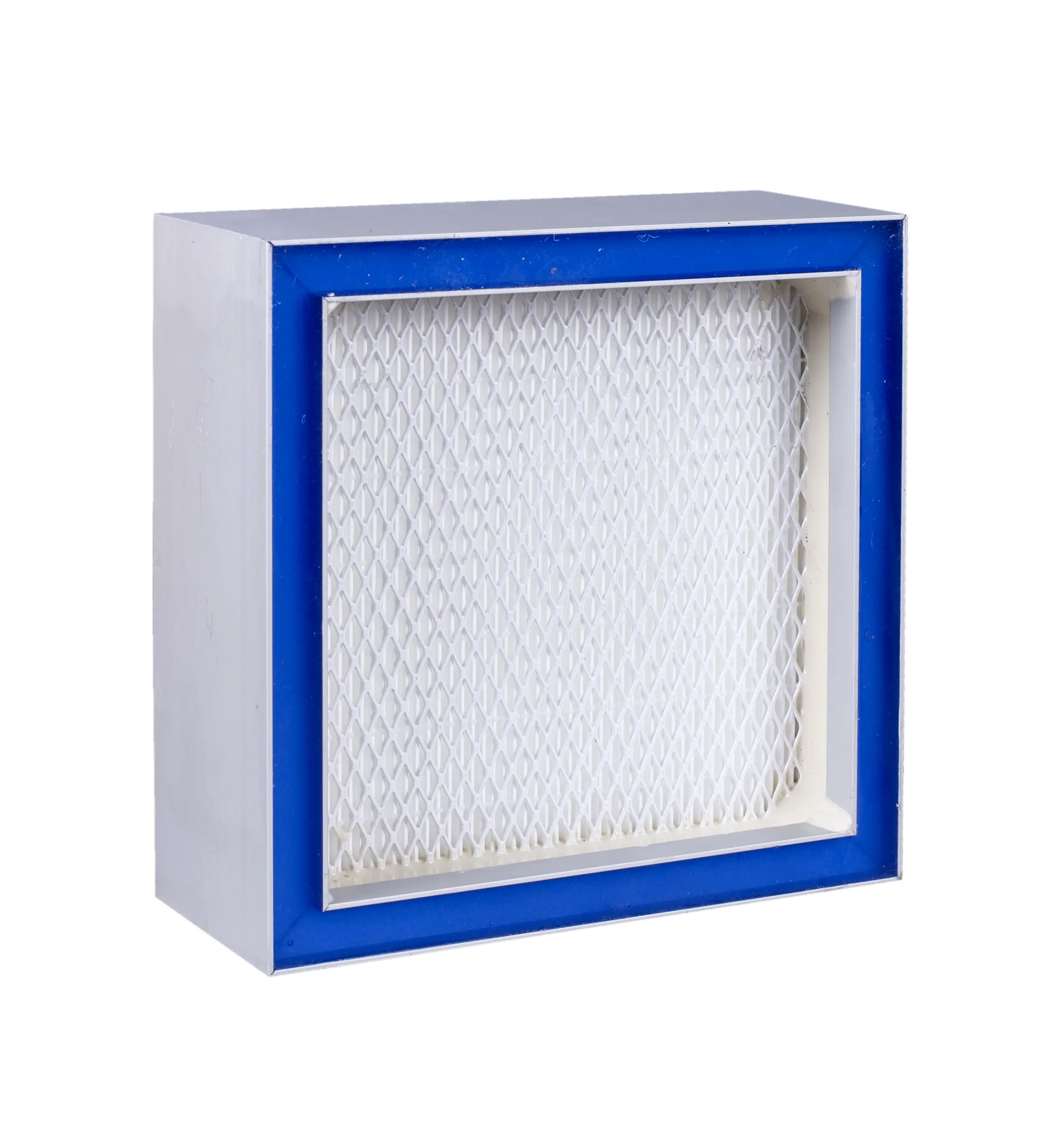
Hepa Filters- Gel Seal 80 MM Aluminium Frame
Safe Air Gel-Sealed 80mm Aluminum Frame HEPA Filters provide advanced air filtration, ideal for environments requiring stringent air quality control.
Check out the productHEPA filters are the final filtration stage in cleanrooms, hospital operating theatres, pharmaceutical and food production areas, laboratories and electronics manufacturing. They are installed at the point where filtered air enters the room, or inside a housing immediately upstream of it.
Choosing a HEPA filter is not only a matter of picking a class. The frame material, the sealing method, the depth and the interface with the existing housing determine whether the filter can be installed at all, and whether it will seal correctly once installed. This page covers those decisions and what we need from you to quote.
Our HEPA Filter Range
All models use minipleat micro glass fibre media with a hotmelt separator and a two-component polyurethane sealant. They differ in frame material, depth and sealing method.
| Model | Frame | Depth | Sealing |
|---|---|---|---|
| HEPA Terminal, 69 mm | Aluminium | 69 mm | Continuous round PU or flat EPDM gasket |
| HEPA Terminal, 78 mm | MDF | 78 mm | Continuous round PU or flat EPDM gasket |
| HEPA Terminal, 78 mm | Aluminium | 78 mm | Continuous round PU or flat EPDM gasket |
| HEPA, 80 mm gel seal | Aluminium | 80 mm | Gel seal |
| HEPA Terminal, 149 mm | MDF | 149 mm | Continuous round PU or flat EPDM gasket |
| HEPA, 149 mm | Aluminium | 149 mm | Continuous round PU or flat EPDM gasket |
Each model is offered in a range of standard face dimensions. Sizes outside that range are manufactured to your drawing — see Request a quotation below.
Which Filter Class Do You Need?
European high-efficiency filters are classified under EN 1822 by their efficiency at the Most Penetrating Particle Size (MPPS). MPPS is not a fixed particle diameter — it is the diameter at which a given filter medium performs worst, in practice in the 0.1–0.3 µm range. This is why a HEPA class cannot be compared directly with a "99.97% at 0.3 micron" figure from a different test convention.
The standard defines three groups:
| Class | Group | Integral efficiency at MPPS | Maximum local penetration |
|---|---|---|---|
| E10 / E11 / E12 | EPA | ≥ 85% / 95% / 99.5% | Not classified by individual scan testing |
| H13 | HEPA | ≥ 99.95% | ≤ 0.25% |
| H14 | HEPA | ≥ 99.995% | ≤ 0.025% |
| U15 / U16 / U17 | ULPA | ≥ 99.9995% / 99.99995% / 99.999995% | ≤ 0.0025% / 0.00025% / 0.0001% |
Two consequences matter for procurement:
E-group filters are not HEPA filters. Classes E10 to E12 belong to the EPA group. They are classified by statistical sample testing, not by scanning each individual filter. If your specification requires a leak-test certificate for the filter you receive, you need H13 or above.
A higher class is not automatically the right answer. A higher class generally means a higher initial pressure drop at the same airflow and face area, which means more fan energy over the service life. The class should follow the project requirement, not the assumption that more is better. Our guide on H13 vs H14 sets out where the difference genuinely matters.
One limit to state plainly: a filter class is a property of the filter, tested under standard conditions. It is not a cleanroom classification, not a sterility guarantee, and not evidence that a facility complies with any regulation. Room classification depends on the installation, the air change rate, the sealing of the whole system and the facility's own qualification.
Frame Material: MDF or Aluminium
Aluminium frames are used where the frame may be exposed to moisture, cleaning agents or repeated handling, and where a gel seal channel is required. Aluminium is also the usual choice where the filter is changed frequently.
MDF frames are a lower-cost option for dry, stable installations. Before specifying an MDF frame, confirm the conditions it will see: whether the plenum is wet-cleaned, whether condensation can occur on the frame, and what the humidity is during both operation and shutdown. If any of these is uncertain, send us the installation details with your enquiry and we will advise on the frame material rather than defaulting to the cheaper option.
Gasket or Gel Seal
The filter class tells you what the medium can do. The seal determines whether the air actually passes through the medium rather than around it.
Gasket seal — a continuous round polyurethane or flat EPDM gasket is compressed between the filter frame and the housing face. It needs a flat, clean sealing surface and an even clamping force. It is the standard solution for most terminal installations.
Gel seal — the filter frame carries a channel filled with gel; a knife edge on the housing enters the gel. This tolerates minor irregularities in the sealing face and is used where the leakage requirement is strict or where the housing geometry makes even gasket compression difficult.
Neither option eliminates leakage by itself. Both depend on the condition of the housing, the clamping mechanism and correct installation. A gel seal fitted to a housing without a matching knife edge will not seal. If you are replacing filters in an existing system, send a photograph of the housing sealing face and clamping mechanism with your enquiry.
→ Further reading: Gel Seal vs Gasket Seal HEPA Filters
Selection Checklist
| Decision | What we need from you | Why it matters |
|---|---|---|
| Filter class | The class your specification requires, or the contamination and room requirement if you are not sure | Determines the medium, and with it the pressure drop and the test documentation available |
| Face dimensions | Width × height, with units, and whether these are the filter dimensions or the housing opening | A filter that is nominally correct but dimensionally wrong cannot be installed |
| Depth | Available depth in the housing, or the depth of the filter currently fitted | Depth drives filtration area, and with it pressure drop at your airflow |
| Frame material | Humidity, cleaning regime and handling frequency at the installation | Determines whether MDF is suitable or aluminium is required |
| Sealing method | Housing type, sealing face condition, clamping mechanism; gel channel present or not | A seal that does not match the housing will leak regardless of filter class |
| Airflow | Design airflow per filter, with units | Pressure drop has no meaning without an airflow |
| Pressure drop limit | Acceptable initial pressure drop, and the final pressure drop at which you change filters | Determines the depth and area required, and the energy cost over the service life |
| Operating conditions | Temperature and humidity in operation and at shutdown | Limits the frame and sealant options |
| Documentation | Whether you need documentation per filter unit or per batch | Test documentation differs by filter class |
| Quantity | Quantity now, and estimated annual requirement | Affects production planning and packaging |
| Destination | Destination country and requested delivery date | Affects packaging and documentation |
→ Related: HEPA Filter Pressure Drop: Initial, Final and Energy Cost · HEPA Filter Sizes: Standard Dimensions and Custom Manufacturing
Housing and Installation Interface
A replacement order is most often wrong because of the interface, not the filter. Before ordering, check:
- Whether the dimensions you have are the filter's or the housing opening's
- Which face of the frame the gasket sits on, and whether the housing seals against that face
- Whether the housing has a gel channel knife edge
- Which direction the airflow enters, and whether the filter is directional
- Whether there is service access to compress the clamping mechanism evenly
If you are specifying a new system rather than replacing filters, our housings and terminal boxes are listed under Filtration Equipment, HEPA Boxes and Filter Frame Housings.
Test Documentation
What can be documented depends on the class. Filters in classes H13 to U17 are scan-tested individually under EN 1822; E10 to E12 filters are classified by statistical sample testing and are not individually leak-tested for classification purposes.
When you request documentation, tell us:
- Which product code and size it is for
- Whether you need it per filter unit or per production batch
- Whether your specification names a test standard and edition
- Whether the document has to accompany the shipment or be sent in advance for approval
Factory testing of a filter and integrity testing of a filter already installed in a system are two different things, carried out at different times and for different purposes. Our guide on HEPA filter testing explains the difference, including what a PAO or DOP leak test does and does not confirm.
Request a technical data sheet
Frequently Asked Questions
Can you manufacture HEPA filters in non-standard sizes? Yes. Send the required width, height and depth with units, the filter class, the airflow and a drawing or sketch if you have one. If you only have the existing filter, a photograph of its label and the housing opening dimensions are usually enough to start.
Is an H14 filter always better than an H13? No. H14 has a higher efficiency requirement at MPPS, but at the same airflow and face area it generally also has a higher pressure drop, which costs fan energy for the life of the filter. The right class is the one your project specification requires.
Are E10, E11 and E12 filters HEPA filters? No. Under EN 1822 these classes belong to the EPA group. They are classified by statistical sample testing rather than individual scan testing. If your specification requires an individual leak test certificate, you need H13 or above.
Does a HEPA filter remove gases and odours? No. HEPA filters are particle filters. Gases, vapours and odours require gas-phase filtration, typically activated carbon, as a separate stage. One does not substitute for the other.
Can a HEPA filter be washed or cleaned? No. The glass fibre medium is damaged by washing, vacuuming or compressed air, and the filter loses efficiency without this being visible. HEPA filters are replaced, not cleaned.
Does the filter class determine my cleanroom class? No. The filter class is a tested property of the filter. Room classification depends on the installation, air change rate, the sealing of the complete system and the facility's own qualification process.
Which documents do I get with the order? This depends on the product and the class. Tell us what your project requires when you send the enquiry and we will confirm what is available for the specific model before you order.
Request a HEPA Filter Quotation
Send the filter class, width × height × depth with units, the airflow per filter, the sealing method and the quantity. If any of this is unclear, send a photograph of the existing filter label and the housing — that is usually enough for us to come back with the right questions.