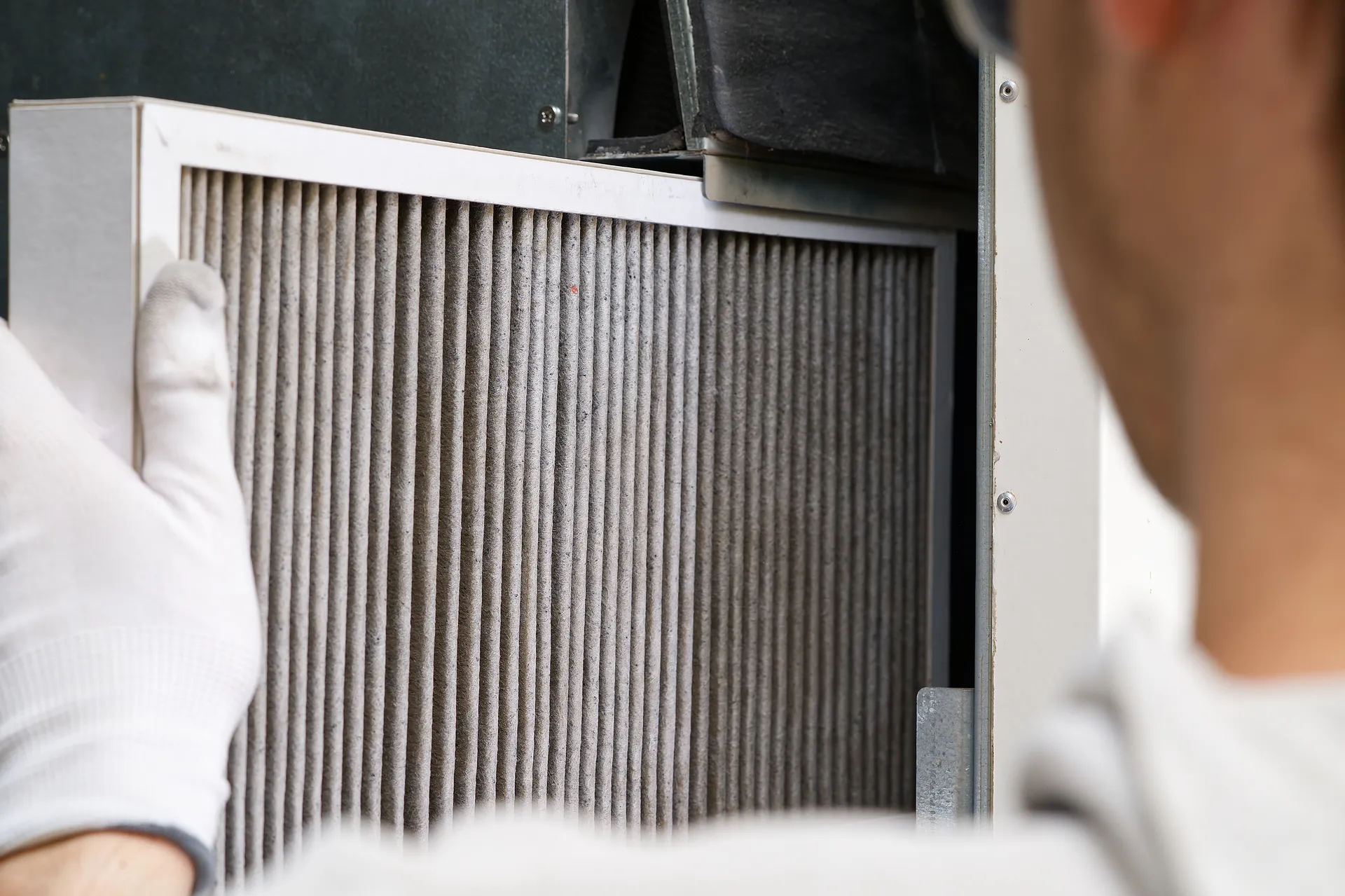
H13 and H14 HEPA Filters Are Not Interchangeable by Default
H13 and H14 HEPA filters are widely used in cleanrooms, pharmaceutical production areas, laboratories, hospitals and industrial HVAC systems. Although both classes provide high-efficiency particulate filtration, their performance limits, leakage requirements and operational implications are different.
Selecting between H13 and H14 should not be based only on choosing the filter with the higher efficiency percentage. The correct decision must consider the contamination risk, required air cleanliness, system airflow, pressure drop, filter housing, sealing method and applicable project specifications.
What Do H13 and H14 Mean?
H13 and H14 are HEPA filter classes used to describe filtration performance at the most penetrating particle size, commonly referred to as MPPS. MPPS represents the particle size range at which a filter medium reaches its lowest filtration efficiency under defined test conditions.
Testing at MPPS provides a more meaningful assessment than referring only to a fixed particle size. A filter that meets its required performance at the most difficult particle size is expected to provide higher efficiency for many particles that are either smaller or larger than the MPPS range.
| Selection Criterion | H13 HEPA Filter | H14 HEPA Filter |
|---|---|---|
| Minimum integral MPPS efficiency | 99.95% | 99.995% |
| Maximum integral penetration | 0.05% | 0.005% |
| Minimum local efficiency | 99.75% | 99.975% |
| Typical selection approach | High-efficiency filtration for controlled environments | Stricter filtration for critical contamination-control processes |
Based on integral penetration limits, an H14 filter permits one-tenth of the particle penetration allowed for an H13 filter. However, this difference does not automatically make H14 the correct choice for every installation.
Where Are H13 HEPA Filters Commonly Used?
H13 HEPA filters can be suitable for many applications requiring controlled particulate levels without the most restrictive filtration class. Depending on project requirements, they may be used in:
- Industrial HVAC installations
- Laboratory ventilation systems
- Healthcare air-handling applications
- Food production and packaging areas
- Selected cleanroom supply-air systems
- Equipment and process exhaust filtration
The suitability of H13 must still be verified against the process risk, cleanroom design, regulatory expectations and user requirement specification. The filter class alone should not be treated as evidence that the complete ventilation system meets the required cleanliness level.
When Is an H14 HEPA Filter Considered?
H14 filters are generally evaluated when the process requires a lower permissible penetration level or more restrictive local leakage performance. Potential applications include critical pharmaceutical areas, sensitive cleanroom processes, sterile production zones and installations where contamination could directly affect product quality.
The use of H14 should be supported by a technical requirement rather than selected only as an upgrade. A higher filter class may affect fan selection, energy consumption and the available airflow if the ventilation system has not been designed for the filter’s actual resistance.
Does H14 Always Have a Higher Pressure Drop?
Filter class alone does not determine pressure drop. Media structure, pleat geometry, effective filtration area, filter depth, separator design and nominal airflow all influence resistance.
Under comparable design conditions, achieving higher efficiency can require a denser filtration medium or a different media configuration. However, a well-designed H14 filter with a large effective media area may have a lower pressure drop than a poorly configured H13 product.
Buyers should therefore compare the initial pressure drop at the same airflow and filter dimensions. The recommended final pressure drop and expected operating conditions should also be reviewed before procurement.
Why Local Leakage Performance Matters
High overall efficiency does not eliminate the risk of local leakage. Particles may bypass the filtration medium through damaged media, frame joints, sealant defects, gasket gaps or incorrect installation.
For this reason, HEPA filter evaluation should include both integral efficiency and local leakage performance. The filter housing, clamping mechanism and gasket or gel seal interface are also part of the final containment system.
H13 or H14: Practical Selection Checklist
Before specifying a filter class, technical buyers and project engineers should evaluate:
- The required room or process cleanliness level
- The contamination risk associated with the application
- The applicable standard, specification or validation protocol
- The nominal airflow of each filter
- The acceptable initial and final pressure drop
- The available fan capacity
- The filter housing and sealing configuration
- The required filter dimensions and frame material
- The need for individual test documentation
- The pre-filter arrangement and expected dust load
Common Mistakes During HEPA Filter Selection
- Choosing H14 without checking the available fan pressure
- Comparing filters tested at different airflow rates
- Evaluating only efficiency and ignoring pressure drop
- Assuming the filter class alone defines cleanroom performance
- Ignoring gasket, gel seal and housing compatibility
- Installing a high-efficiency filter without adequate pre-filtration
- Ordering replacement filters without confirming exact dimensions
Select the Filter According to the Complete System
The difference between H13 and H14 is technically significant, but the most efficient filter is not automatically the most suitable filter. Correct selection requires a balance between filtration performance, leakage control, airflow, energy use and process risk.
Safe Air provides industrial and custom-size filtration solutions for different HVAC and controlled-environment requirements. Review the available HEPA filter solutions or submit your dimensions, filter class, airflow and application details for a project-specific evaluation.
Frequently Asked Questions
No. H13 and H14 HEPA filters should not be used interchangeably without a technical assessment. They have different filtration efficiency, penetration limits and application requirements.
The main difference is filtration efficiency at the most penetrating particle size, known as MPPS. H13 filters provide at least 99.95% integral efficiency, while H14 filters provide at least 99.995%.
No. H14 offers higher filtration efficiency, but the correct choice depends on contamination risk, airflow, pressure drop, fan capacity and project requirements. A higher filter class is not automatically the most suitable option.
An H13 filter should not replace an H14 filter unless the change is approved through technical evaluation and validation. The replacement may affect cleanroom performance, process protection and regulatory compliance.
Not always. Pressure drop depends on filter media, pleat design, filtration area, filter depth and operating airflow. Filter class alone does not determine resistance.
MPPS is the particle size range that is most difficult for the filter to capture. Testing at MPPS provides a reliable measurement of the filter’s minimum efficiency under defined conditions.
No. Filters with the same external dimensions may have different airflow capacities, pressure drops, sealing systems, frame materials and test classifications. The complete technical specification must be compared.
H14 filters are commonly evaluated for critical cleanrooms, pharmaceutical production, sterile processes, laboratories and other contamination-sensitive environments. The exact requirement must be determined by the project specification.
H13 filters can be suitable for controlled environments, industrial HVAC systems, laboratories and healthcare applications where the required risk assessment and cleanliness level allow H13 performance.
Check the available fan capacity, nominal airflow, initial pressure drop, final pressure drop, filter housing, sealing method and validation requirements. The system must be able to operate correctly with the selected filter.