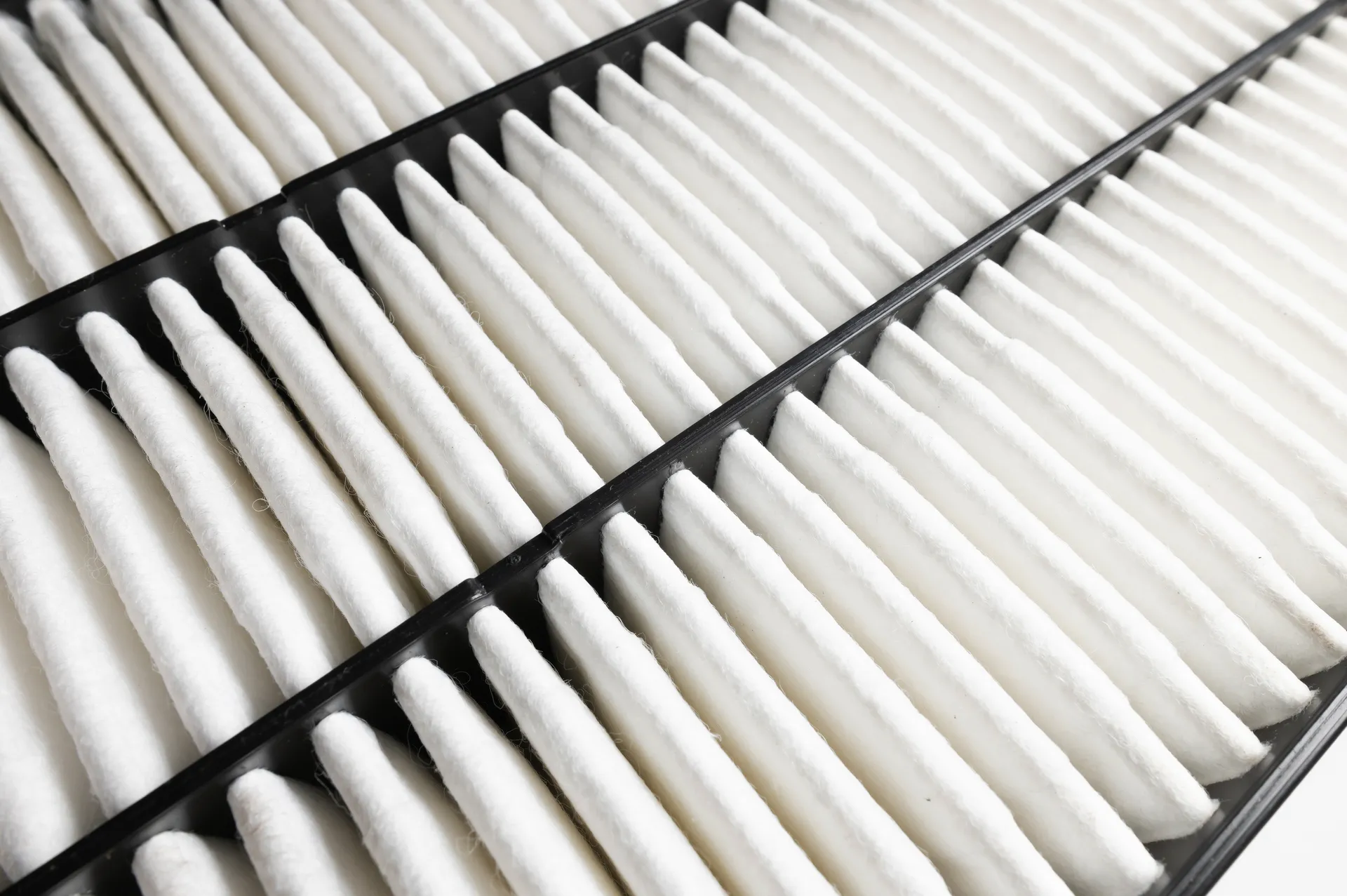
What Is HEPA Filter Integrity Testing?
HEPA filter integrity testing is a controlled procedure used to determine whether an installed HEPA filtration system contains leaks that could allow unfiltered air to enter a cleanroom or another controlled environment. The test evaluates more than the filter media itself. It also examines the filter frame, sealant, gasket or gel seal, mounting system and accessible housing interfaces.
The procedure is commonly called a PAO test, DOP test, HEPA leak test or installed filter system leakage test. During testing, a challenge aerosol is introduced into the airflow upstream of the filter. A calibrated instrument then measures the aerosol concentration downstream while the filter face and sealing perimeter are systematically scanned.
A measurable increase at a specific location may indicate a local penetration point, media defect, sealing problem or bypass path. The purpose is therefore not simply to confirm that the filter belongs to a particular efficiency class. It is to verify that the complete installed filtration arrangement performs without unacceptable localized leakage.
Why Is an Installed HEPA Filter Tested?
A HEPA filter can be manufactured and classified correctly but still fail to provide the expected protection after installation. Transportation, storage, handling and mounting introduce risks that are not fully represented by factory documentation.
Filter media may be damaged by accidental contact. A frame may become distorted during transportation. A gasket may not receive uniform compression. A gel seal may not engage correctly with the knife-edge profile. Gaps may also develop between the filter and its housing even when the filter element itself remains undamaged.
These defects may be too small to identify through a visual inspection. They may also remain undetected during routine airflow, differential pressure or room particle concentration measurements. An integrity test challenges the installed system directly and searches for localized penetration paths.
A factory test describes the performance of the filter element under specified test conditions. An installed integrity test evaluates whether the filtration system remains leak-tight after transportation, handling and installation.
Factory Filter Testing and Installed Integrity Testing Are Different
Factory testing and on-site integrity testing should not be treated as interchangeable procedures. They answer different technical questions and are normally performed at different stages of a project.
| Evaluation | Primary Purpose | Typical Scope |
|---|---|---|
| Filter classification testing | Determine the efficiency class and performance of the filter element | Filter media, overall efficiency, local performance and filter element characteristics |
| Installed integrity testing | Identify leakage after the filter has been mounted | Filter face, media pack, frame, gasket or gel seal and installation interfaces |
| Cleanroom particle classification | Determine airborne particle concentration in the room | Cleanroom or clean-zone air cleanliness |
| Airflow testing | Verify airflow velocity, volume or distribution | Ventilation and air-distribution performance |
The EN 1822 series addresses the classification and performance testing of EPA, HEPA and ULPA filters. It also includes methods for determining leakage of the filter element. ISO 14644-3 provides test methods used to evaluate cleanrooms and associated controlled environments, including installed filter system leakage testing.
A valid factory certificate is important, but it does not automatically confirm that the filter remained undamaged or was sealed correctly after installation. For critical applications, both product-level documentation and installation-level verification should be considered.
What Do PAO Test and DOP Test Mean?
PAO and DOP refer to challenge aerosols associated with HEPA filter leak-testing procedures. The aerosol is introduced upstream so that the downstream side can be checked for penetration. The instrument compares the downstream signal with the established upstream challenge concentration.
DOP is an older industry term connected with dioctyl phthalate-based aerosol testing. PAO refers to polyalphaolefin aerosol, which is widely associated with current field-testing practice. In everyday technical language, some companies continue to use the expression “DOP test” as a general name for HEPA integrity testing even when the actual challenge aerosol is PAO.
The selected aerosol, generation method, concentration range, instrument configuration and acceptance criteria must be compatible with the applicable procedure, facility requirements and validated test method. PAO and DOP should not be treated as casual interchangeable substances without reviewing the test specification.
The detailed chemical, safety and application differences between these methods are covered in the next article in this category: PAO Test vs DOP Test: Differences, Safety and Current Applications.
How Does a HEPA Integrity Test Work?
The exact procedure depends on the filter installation, airflow system, selected standard, equipment and facility protocol. However, a typical test follows a common technical sequence.
- Review the filter and installation: The operator confirms the filter identification, class, location, dimensions, airflow condition and sealing arrangement.
- Introduce the challenge aerosol: An aerosol generator introduces the selected test aerosol into the airflow upstream of the filter.
- Establish a stable upstream challenge: The aerosol must be distributed sufficiently so that the test represents the filter area being evaluated.
- Measure the upstream concentration: A reference concentration is established for comparison with downstream readings.
- Scan the downstream surface: A photometer probe or another approved detection arrangement is moved across the filter face using a controlled scan pattern.
- Inspect the sealing perimeter: The frame edges, corners, gasket, gel seal and accessible installation interfaces are included in the evaluation.
- Record the findings: Detected penetration points, repairs, deviations, equipment information and final results are documented.
- Retest when necessary: A repaired or reinstalled filter is tested again before being accepted.
The test must be conducted using suitable equipment and a defined procedure. Probe speed, probe distance, aerosol distribution, upstream concentration and instrument response can all affect the reliability of the result.
Which Parts of the Installation Are Evaluated?
A proper integrity test is not limited to the centre of the filter media. Local leakage frequently occurs near structural and sealing components.
- Complete downstream face of the filter media
- Media pack and separator or mini-pleat area
- Media-to-frame bonding line
- Filter frame corners and joints
- Gasket sealing perimeter
- Gel seal and knife-edge interface
- Filter-to-housing contact points
- Accessible terminal housing or mounting interfaces
The test scope must be defined according to the installation design. Terminal HEPA filters, fan filter units, hooded filters, high-capacity filters and filters mounted inside air-handling equipment may require different access arrangements and scan techniques.
What Problems Can an Integrity Test Detect?
Damage to the Filter Media
Punctures, tears, crushed pleats and handling damage may create localized penetration points. Even a small physical defect can affect contamination control in a critical zone.
Media-to-Frame Leakage
The bond between the filter pack and frame can become damaged or incomplete. Leakage may occur along the sealant line even when the visible media surface appears intact.
Incorrect Gasket Compression
A gasket-sealed filter requires adequate and uniform compression. Uneven clamping, an unsuitable gasket profile or a distorted mounting surface may allow air to bypass the filter.
Gel Seal Installation Problems
Gel-sealed filters depend on correct engagement between the gel channel and knife edge. Misalignment, damaged gel or incomplete penetration of the knife edge may compromise the seal.
Housing and Mounting Bypass
A successful filter-element test does not exclude leakage through the surrounding housing. Installation joints, access panels and mounting interfaces must therefore be considered within the defined test scope.
What Does the Test Not Confirm?
HEPA integrity testing is an essential verification step, but it does not replace every other cleanroom performance test.
A successful leak test does not independently confirm room particle classification, airflow balance, recovery performance, pressure cascade, temperature control or humidity control. It also does not determine whether the selected filter class, airflow capacity or pressure-drop characteristics are suitable for the application.
Cleanroom qualification generally combines several evaluations. Integrity testing answers a specific question: whether an unacceptable localized penetration or bypass path exists within the tested installed filter system.
When Is HEPA Integrity Testing Important?
The required test schedule should be established through applicable standards, industry requirements, facility procedures and risk assessment. Integrity testing is commonly considered at the following stages:
- After the initial installation of a HEPA filter
- Before a cleanroom or controlled zone is commissioned
- After replacing or reinstalling a filter
- After maintenance that may affect the filter or housing
- After suspected physical damage or abnormal contamination results
- During periodic cleanroom requalification
- Following changes to the terminal housing, ceiling system or airflow arrangement
The appropriate frequency is not identical for every facility. Pharmaceutical manufacturing, laboratories, healthcare areas, semiconductor production and other controlled environments may use different schedules based on process risk and quality-system requirements.
Common Mistakes During HEPA Leak Testing
Relying Only on the Factory Certificate
A certificate does not confirm the condition of the filter after shipment and installation. Product documentation and in-situ verification serve separate purposes.
Scanning Only the Filter Centre
The sealing perimeter and media-to-frame area are common locations for leakage. Excluding them can produce an incomplete evaluation.
Using an Unstable Upstream Challenge
Poor aerosol distribution can create unreliable readings. The upstream challenge must be suitable for the installation and measuring method.
Ignoring Instrument Calibration
Photometers, aerosol generators and related equipment must be maintained and calibrated according to the test procedure and quality system.
Applying One Acceptance Limit to Every System
Acceptance criteria should come from the applicable standard, project specification, filter class, facility protocol and validated method. A value used for one installation should not automatically be copied to another.
Repairing Without Retesting
A repaired location must be evaluated again. The repair itself may alter airflow or create another potential penetration path.
Filter Selection Should Consider Future Integrity Testing
Integrity testing is easier and more reliable when it is considered during the filter and housing selection stage. The system should provide appropriate upstream aerosol injection, aerosol mixing and downstream scanning access.
The filter dimensions, frame material, sealing method, mounting direction and terminal housing design should be compatible with the cleanroom validation strategy. A project using gasket-sealed filters may have different installation controls from one using gel-sealed terminal filters.
Safe Air supplies different HEPA filter configurations for industrial HVAC systems and controlled environments. Project evaluation should include the required filter class, dimensions, airflow, pressure drop, frame construction, gasket or gel-seal arrangement and requested technical documentation.
Additional information about cleanroom applications is available in HEPA Filters for Cleanrooms. The relationship between filter classification and EN 1822 is discussed in HEPA Filter EN 1822 Standard Explained.
Why Integrity Testing Protects Cleanroom Performance
A HEPA filter cannot protect a controlled environment if air can bypass the media through a damaged area or an incomplete seal. Integrity testing closes the gap between product specification and real installation performance.
For purchasing, engineering and quality teams, the test provides documented evidence that the installed filtration path has been examined for localized leakage. It also supports early identification of installation defects before they affect production, qualification activities or contamination investigations.
Selecting the correct filter is therefore only one part of contamination control. Installation quality, sealing design, test access, documented verification and periodic reassessment must be considered together.
For project-specific HEPA filter dimensions, frame options, sealing configurations and documentation requirements, review the Safe Air HEPA filter range and submit the operating conditions with your technical enquiry.
Frequently Asked Questions
A HEPA filter integrity test checks an installed filter system for localized leaks in the media, frame, seal and mounting interfaces by introducing a controlled aerosol upstream and scanning the downstream side.
PAO testing is a commonly used method for HEPA leak testing. PAO is used as the challenge aerosol while the downstream filter surface and sealing perimeter are evaluated for penetration.
DOP is a long-established industry term. Some facilities continue to use “DOP test” as a general expression for HEPA integrity testing even when PAO is used as the actual challenge aerosol.
Factory testing verifies the filter element under specified conditions. Installed testing checks whether transportation, handling, mounting or sealing introduced leaks after the filter left the factory.
No. Room particle classification measures airborne particle concentration, while integrity testing searches for localized leakage through or around the installed filter.
The test normally covers the filter face, media-to-frame bond, frame edges, corners, gasket or gel seal and accessible filter-to-housing interfaces.