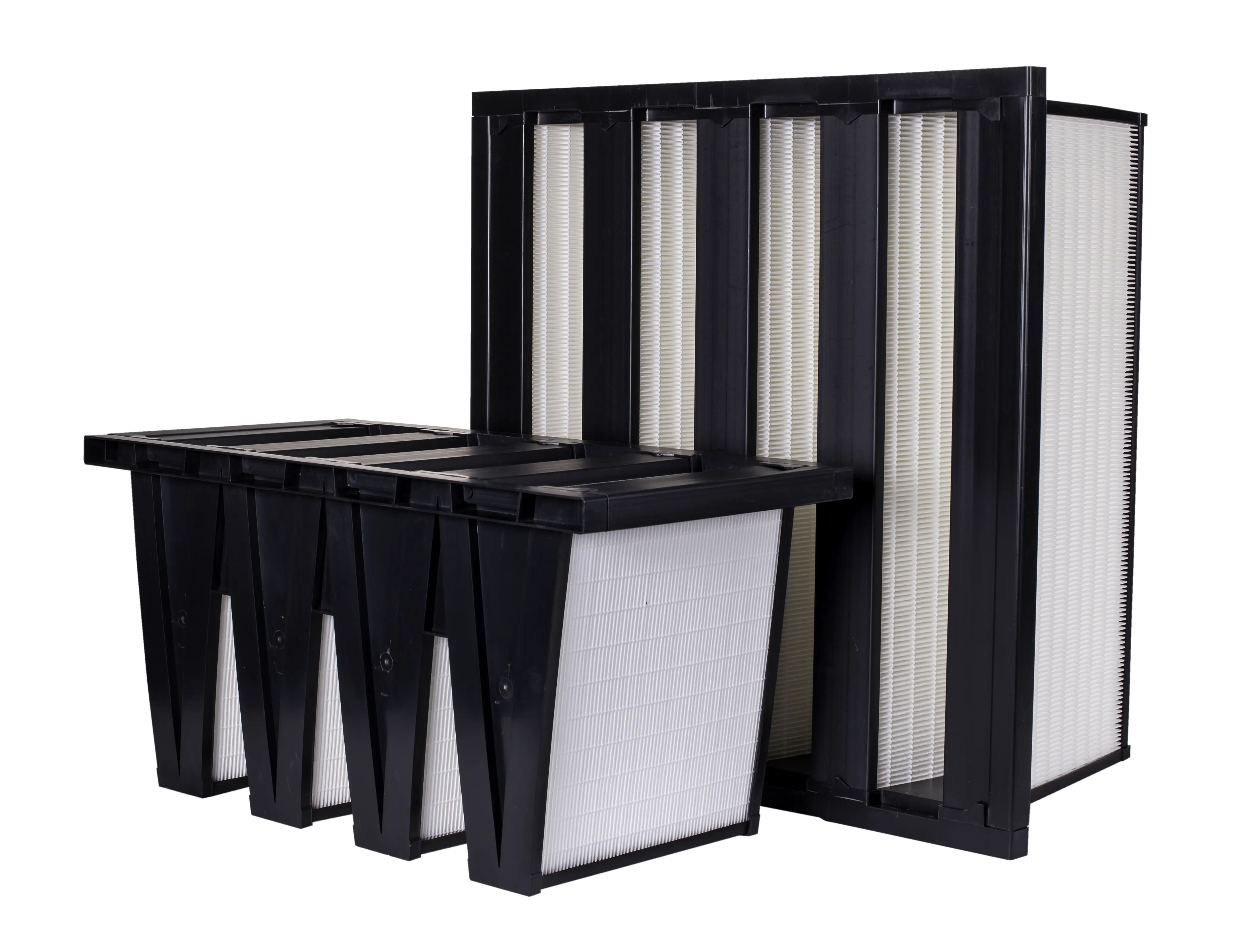
Dimensions cause more errors in HEPA filter selection than any other parameter. Even with the correct class and the correct airflow, a filter that does not seat in its housing — or one specified without allowing for the seal — can reduce system efficiency to nothing. This article covers how HEPA filter dimensions are expressed, which standard sizes are common, why depth matters and when custom manufacturing is required.
How HEPA Filter Dimensions Are Expressed
HEPA filter dimensions are always given as width x height x depth, in millimetres. In a specification such as 610 x 610 x 292 mm, the first two values describe the face of the filter and the third describes its depth in the direction of airflow.
These are the outer dimensions of the filter and do not include the seal. Confusing them with housing dimensions is the single most common source of installation problems on site. Stating which measurement you are giving — filter outer dimension or housing inner dimension — prevents incorrect manufacture.
Common Standard HEPA Filter Sizes
The face dimensions most frequently encountered in industrial applications are:
- 610 x 610 mm — the metric equivalent of 24 x 24 in and the most common standard. The reference size for air handling units and cleanroom ceiling modules.
- 610 x 1220 mm — 24 x 48 in; preferred in high-volume air handling units.
- 305 x 610 mm — 12 x 24 in; a half module, used in narrow ducts and in the edge rows of ceiling systems.
- 592 x 592 mm — the metric size that fits 600 mm modular ceiling systems.
- 457 x 457 mm and 305 x 305 mm — small cabinets, laminar flow units and biosafety cabinets.
Common as these are, they are not obligatory. In an existing facility the housing may match none of them, and custom manufacturing then becomes relevant.
Depth: The Dimension That Governs Performance More Than Price
Depth determines how much media area can be fitted inside the filter. More media area means a lower face velocity at the same airflow, which in turn means lower pressure drop, lower energy consumption and longer service life. Common depths are:
- 292 mm: The classic deep-pleat box filter. The greatest media area, the lowest pressure drop and the longest life. The standard for air handling units and high-volume applications.
- 150 mm: An intermediate depth; an alternative to 292 mm where space in the unit is restricted.
- 110 and 90 mm: Compact ceiling modules and cabinets.
- 78 and 69 mm: Mini-pleat panel filters, used in cleanroom ceilings and laminar flow units where depth is limited.
A frequent mistake is selecting a shallow filter purely to save space. At the same airflow, a 78 mm panel produces a markedly higher pressure drop than a 292 mm box; fan energy and change frequency recover that difference over the operating life. We cover the cost side in HEPA filter pressure drop and energy cost.
The Relationship Between Size and Nominal Airflow
The airflow a filter can carry depends on the media area, which is set by face dimensions and depth together. A 610 x 610 x 292 mm H14 filter is typically rated at a nominal airflow in the region of 1,500 m³/h, depending on manufacturer and media area, while a 78 mm deep mini-pleat panel of the same face is usually rated closer to 1,000 m³/h.
These figures vary between manufacturers; the product data sheet is the authority for any specific item. The principle is what matters: operating above nominal airflow raises pressure drop sharply, shortens filter life, and increases leakage risk through elevated face velocity.
How Frame and Seal Affect Dimensions
The filter's outer dimension includes the frame but not the seal. On gasket-sealed filters, compression of the gasket introduces a few millimetres of allowance; on gel-sealed filters, a channel in the filter frame seats onto a knife-edge in the housing, and the installation logic is entirely different.
A gasket-sealed filter therefore cannot be fitted to a gel-seal system, or the reverse. The seal type must be stated along with the dimensions. We compare the two systems in gel seal vs gasket seal HEPA filters.
Frame material also affects usable dimensions: at the same outer size, an aluminium profile frame can offer a slimmer section than MDF and slightly increase the net flow area. For selection guidance, see MDF vs aluminium frame HEPA filters.
When Is a Custom Size HEPA Filter Required?
Custom manufacturing becomes relevant when:
- The housing in an existing facility does not match standard sizes
- Imported equipment uses inch-based dimensions that do not align with local standards
- The edge rows of a ceiling system cannot take a full module
- An equipment manufacturer (OEM) specifies a filter particular to its own cabinet
- Space constraints require a non-standard depth
The critical point with custom sizes is not to stop at making the filter fit. When dimensions change, media area changes with them, and nominal airflow and pressure drop must be reassessed. Otherwise the result is a filter that seats correctly but strains the system.
Common Mistakes When Taking Measurements
- Reporting the housing inner dimension as the filter outer dimension. The filter either does not fit or its gasket is never compressed.
- Copying the label from the old filter without measuring. The label may show a nominal size while the actual size differs — and the previous filter may itself have been wrongly specified.
- Omitting depth. Ordering on face dimensions alone leaves performance entirely undefined.
- Not stating airflow direction. On directional frames and models with handles, orientation matters as much as size.
- Not stating seal type. Gasket and gel seal systems are not interchangeable.
What to Provide When Specifying Dimensions
The following is sufficient for correct manufacture:
- Width x height x depth (mm), and whether this is the filter outer dimension or the housing inner dimension
- Filter class (H13, H14, or the application requirement)
- Nominal airflow (m³/h)
- Seal type: gasket or gel seal
- Frame material or ambient conditions
- A photograph of the existing filter and its label, if available
Safe Air manufactures HEPA filters in standard sizes and to project-specific dimensions. Review the range on our HEPA filters page and, for high-volume applications, high-capacity HEPA filters. For dimensional assessment and quotations, contact us.
Frequently Asked Questions
Dimensions are always given as width x height x depth, in millimetres. The first two values describe the filter face and the third describes depth in the direction of airflow. These are the outer dimensions of the filter and do not include the seal.
A face dimension of 610 x 610 mm (the metric equivalent of 24 x 24 in) is the most common standard, generally combined with a depth of 292 mm. Sizes of 610 x 1220 mm, 305 x 610 mm, 592 x 592 mm and 305 x 305 mm are also widely used.
Depth determines the media area that can be fitted inside the filter. More media area means lower face velocity at the same airflow and therefore lower pressure drop, which reduces fan energy and extends filter life. Choosing a shallow filter purely to save space raises operating cost.
Custom manufacturing applies when the existing housing does not match standard sizes, when imported equipment uses inch-based dimensions that do not align with local standards, when the edge rows of a ceiling system cannot take a full module, when an OEM specifies a filter for its own cabinet, or when space constraints require a non-standard depth.
Reporting the housing inner dimension as the filter outer dimension. The filter then either does not fit, or its gasket is never compressed and air bypasses it. Always state clearly whether the measurement given is the filter outer dimension or the housing inner dimension.