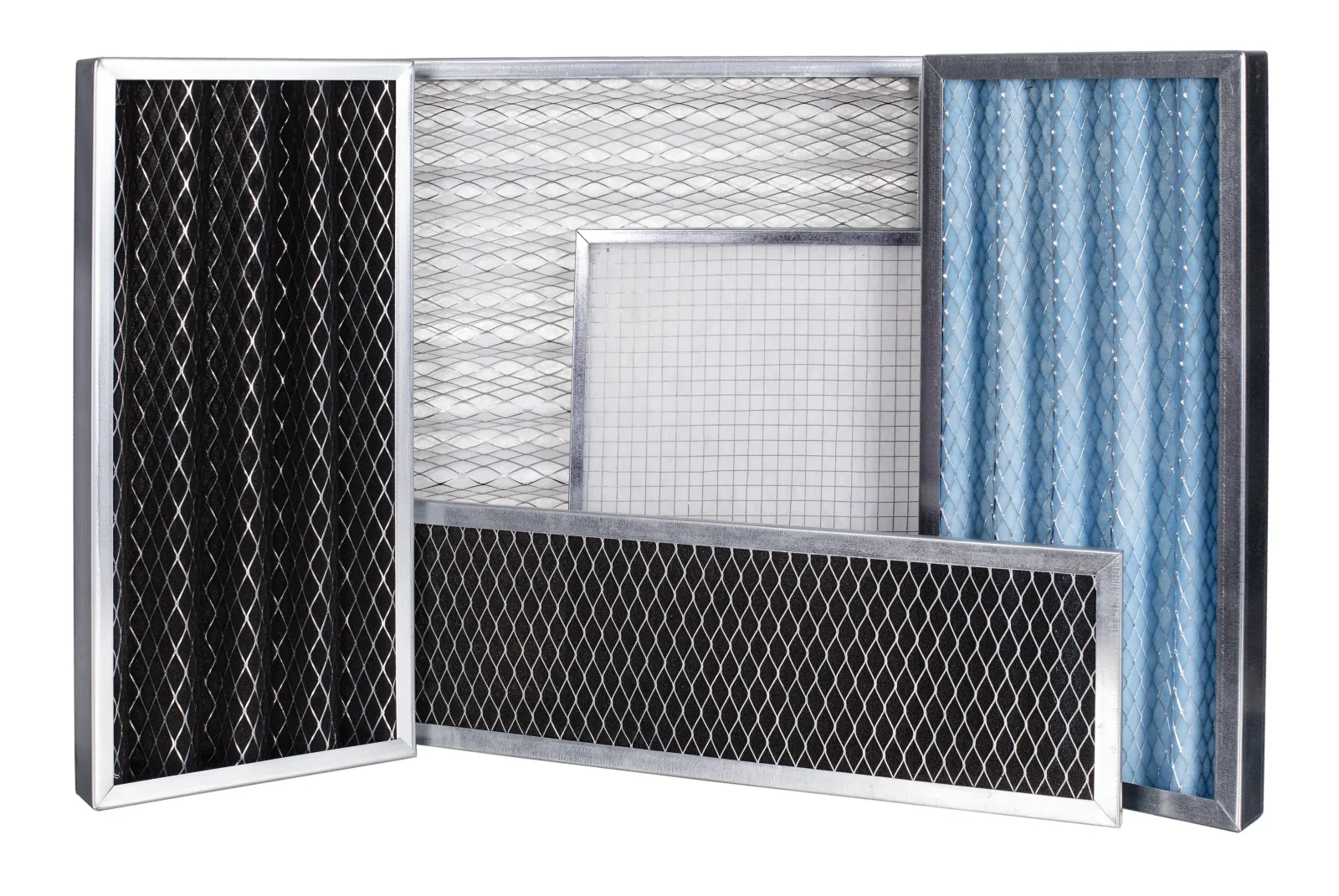
The Short Answer: Unit Price Is a Misleading Measure for Cassette Filters
A cassette filter is not a capital item but a consumable. In the same air handling unit it is replaced several times a year, often dozens at a time. The right question is therefore not "what does this filter cost?" but "what does this filter cost me per year?"
The annual cost of a cassette filter comprises three items: purchase price, change labour, and the energy the fan spends overcoming it. Looking only at the first leads to the wrong decision in most facilities.
The Technical Factors That Set the Price
1. Frame Material — the Dominant Item
Most of the price difference between cassette filters comes not from the media but from the frame:
- Cardboard: The most economical option, suitable for dry applications at room temperature.
- Plastic (ABS / polystyrene): Between cardboard and galvanised steel; light and moisture tolerant.
- Galvanised steel: A durable industrial standard, tolerant of mechanical load and moisture.
- Aluminium and stainless steel: The highest cost, used where corrosion resistance, high temperature or washability is required.
The most expensive mistake here is fitting a cardboard-framed filter in a humid air handling unit because it was cheap. When the frame disintegrates the media separates from the housing and the system runs unfiltered — and this usually goes unnoticed until the next service.
2. Filter Class
There is a marked difference between a coarse class (ISO Coarse) filter and an ePM1 class filter, both in media cost and in the media area required. A higher class needs more media and more pleats to hold the same pressure drop.
A frequent mistake is specifying a higher class than needed for the pre-stage. The pre-filter's job is not to capture fine particles but to cut the coarse load and protect the filter behind it. For class selection, see our ISO 16890 vs EN 779 comparison.
3. Media Type
Synthetic (polyester/PET) media is the most economical option. Glass fibre media achieves higher efficiency but costs more. Polyurethane foam is priced by its PPI value. Media with an activated carbon layer sits in an entirely different cost class — it captures gases, not particles.
4. Pleat Count and Media Area
Two cassette filters of identical outer dimensions can differ twofold in the media area packed inside. More pleats means more material and more labour, so the price rises. In return, pressure drop falls and the filter lasts longer. This is the central economic trade-off discussed below.
5. Size: Standard or Custom?
Standard sizes suit series production and lower unit cost. For custom sizes, cutting and frame preparation are set up for that job specifically, and the difference is pronounced on small orders. For detail, see cassette filter sizes.
6. Quantity and Lead Time
Cassette filters are usually bought in bulk, and unit cost falls markedly as quantity rises. A facility that plans its annual consumption in advance pays less per item than one working from urgent orders.
Unlike HEPA: There Is No Individual Test Cost
HEPA filters must be individually scanned to EN 1822 and each must carry its own report; this accounts for a visible share of unit cost.
No such requirement applies to cassette filters. ISO 16890 classification rests on a type test; filters are not tested one by one. Asking whether a cassette filter quotation includes an individual test report is therefore not meaningful — the right question is which ISO 16890 report the filter rests on, and whether that report includes the discharged value.
The Washable Exception: Metal Grease Filters
As a general rule filters are not washed. Metal grease filters used in kitchen hoods are the exception: they are aluminium or stainless labyrinth constructions, designed to be washed repeatedly, and must be non-combustible for fire safety.
With these products the economics invert: purchase price is high but annual cost is close to zero. Attempting to wash a cassette filter with synthetic media, by contrast, destroys the fibre structure and renders the filter unusable.
The Real Cost: Annual Consumption, Labour and Fan Energy
Consider an example. A mid-sized air handling unit holds 20 cassette filters and they are changed three times a year — 60 filters annually. In such a facility:
- Change labour accumulates into significant man-hours over a year, even at a few minutes per filter. If a longer-lasting filter reduces changes from three to two per year, the saving comes not only from the filter price but from the labour.
- Fan energy is frequently the largest single item in the cost a filter generates over its life. A filter with more media area runs at a lower pressure drop and the fan consumes less.
- A cheap filter that clogs early can cost more in total despite its low unit price, by being changed more often and loading the fan harder.
When comparing, therefore, ask for three figures together: initial pressure drop at nominal airflow, recommended final pressure drop, and dust holding capacity. These three describe how many months a filter will last far better than the unit price does.
Why Economising on the Pre-Filter Backfires
In most systems the cassette filter is the pre-stage, with a far more expensive filter behind it. Cutting back on that stage — a cheaper class, less frequent changes — lets coarse dust reach the bag, compact or HEPA filter downstream.
The result is that a saving of a few units on cassette filters is paid for by the early replacement of a filter costing many times more. The way to reduce filtration cost is not to weaken the pre-stage but to configure it correctly.
What Information Is Needed for a Quotation?
- Outer dimensions: width x height x depth (mm)
- Filter class (ISO 16890 class, or the former EN 779 code)
- Nominal airflow (m³/h)
- Preferred frame material, or the ambient conditions (humidity, temperature, grease)
- Media type preference, if any
- Order quantity and estimated annual consumption
- Lead time
Safe Air manufactures cassette filters with synthetic, polyurethane, cardboard and metal frames in standard and custom sizes. Review the products on our cassette filters page, and contact us for pricing based on your annual consumption.
Frequently Asked Questions
Frame material is the dominant item: cardboard is the most economical, plastic and galvanised steel sit in the middle, and aluminium and stainless steel are the most expensive. Filter class, media type, pleat count (media area), whether the size is standard or custom, and order quantity follow.
A cassette filter is a consumable, replaced several times a year and often dozens at a time in the same unit. Real cost comprises purchase price, change labour and the fan energy spent overcoming the filter. A cheap filter that clogs early can cost more overall by being changed more often and loading the fan harder.
No. Individual scanning is required for H13 and H14 HEPA filters under EN 1822. ISO 16890 classification for cassette filters rests on a type test and filters are not tested one by one. The right question is which ISO 16890 report the filter rests on and whether that report includes the discharged value.
Cassette filters with synthetic or glass fibre media cannot be washed; washing destroys the fibre structure and renders the filter unusable. The exception is the metal grease filter used in kitchen hoods: an aluminium or stainless labyrinth construction designed to be washed repeatedly.
No, it generally increases it. In most systems the cassette filter is the pre-stage, with a far more expensive bag, compact or HEPA filter behind it. Weakening the pre-stage lets coarse dust reach that filter directly, and the far more costly component is replaced earlier than necessary.