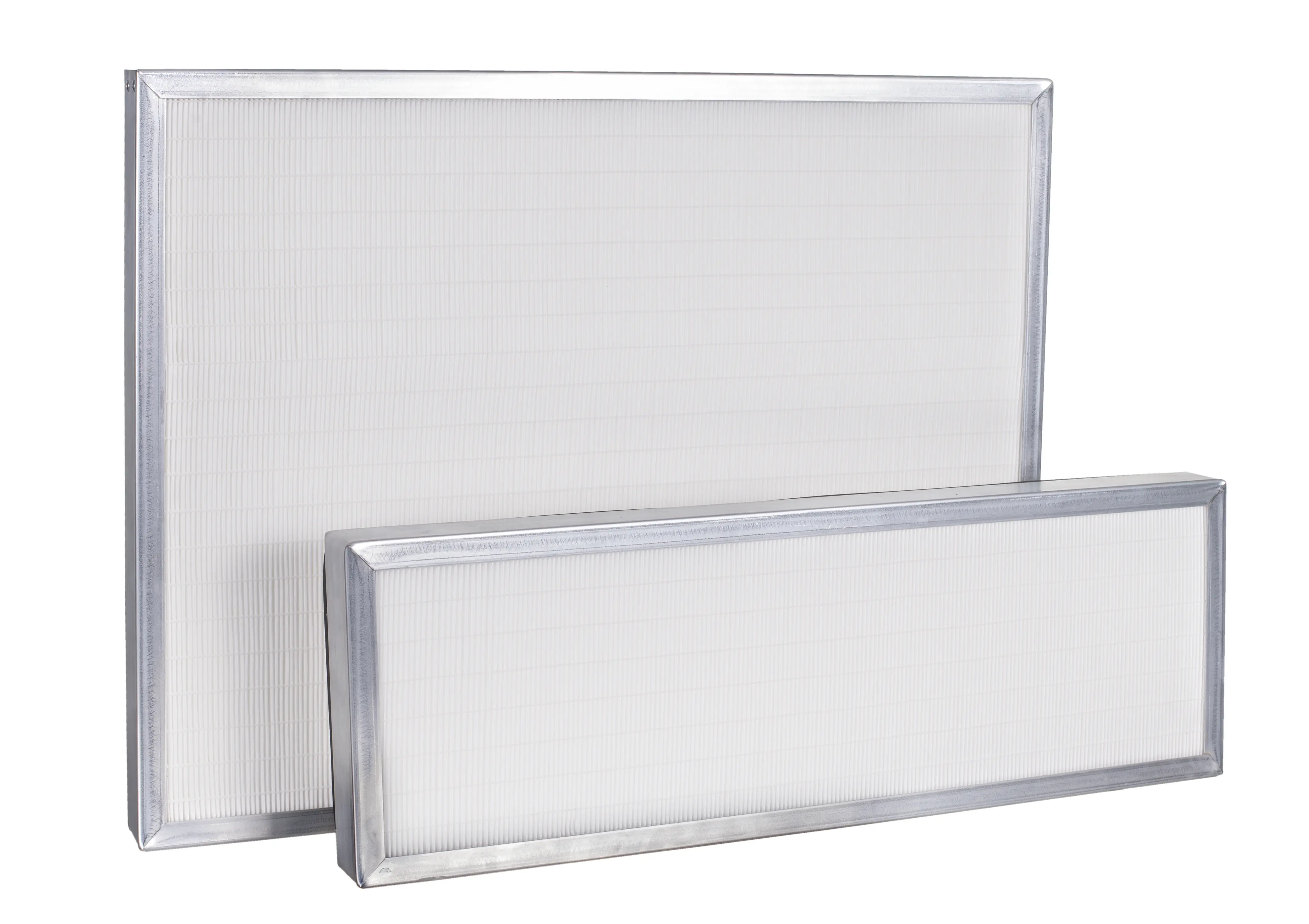
Galvanized Frame Panels
Safe Air Galvanized Frame Panel Filters offer high performance in industrial and commercial environments with a sturdy galvanized frame design.
Check out the product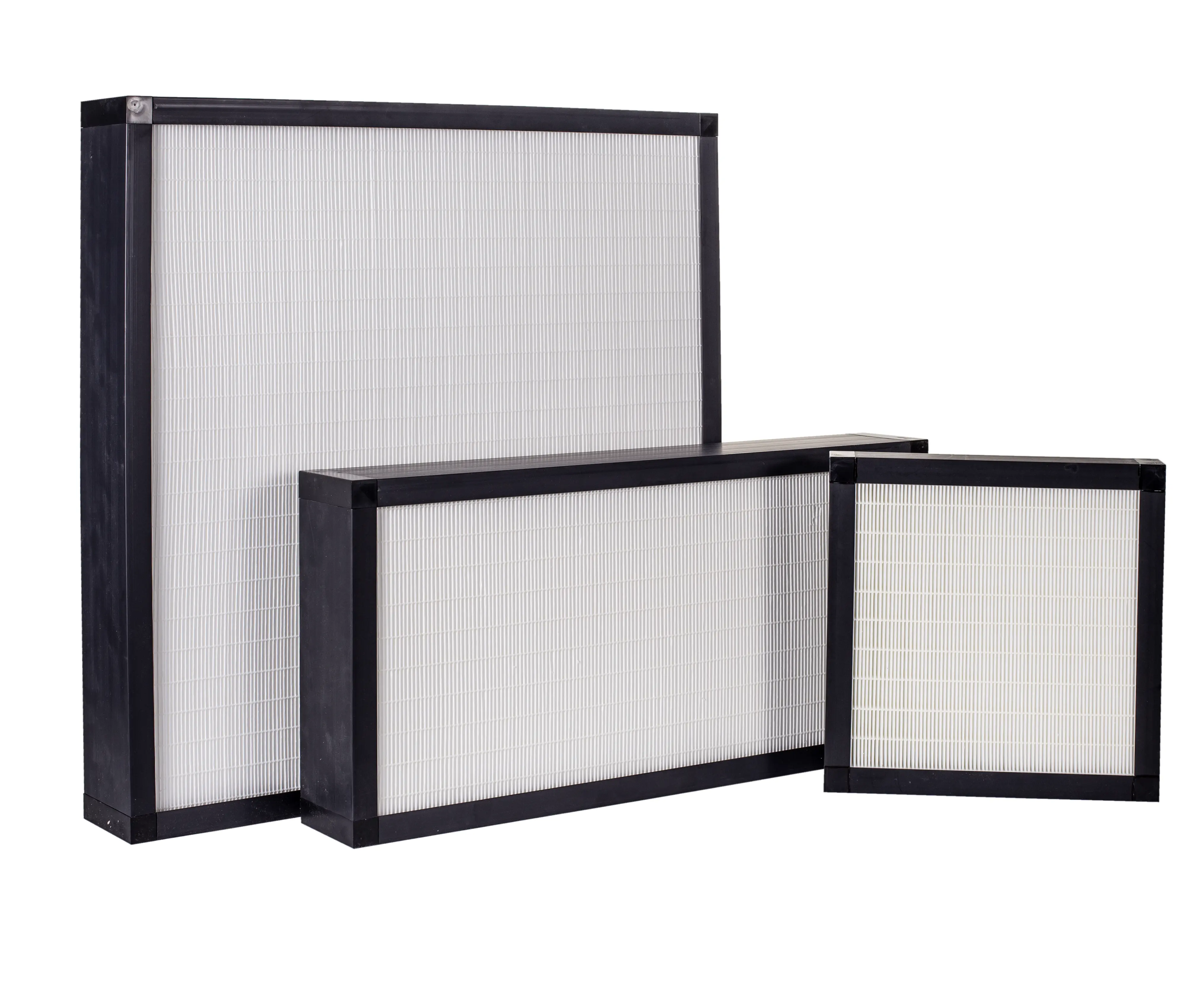
Plastic Frame Panels
Safe Air Plastic Frame Panel Filters are a lightweight, durable, and cost-effective solution widely used in ventilation systems.
Check out the product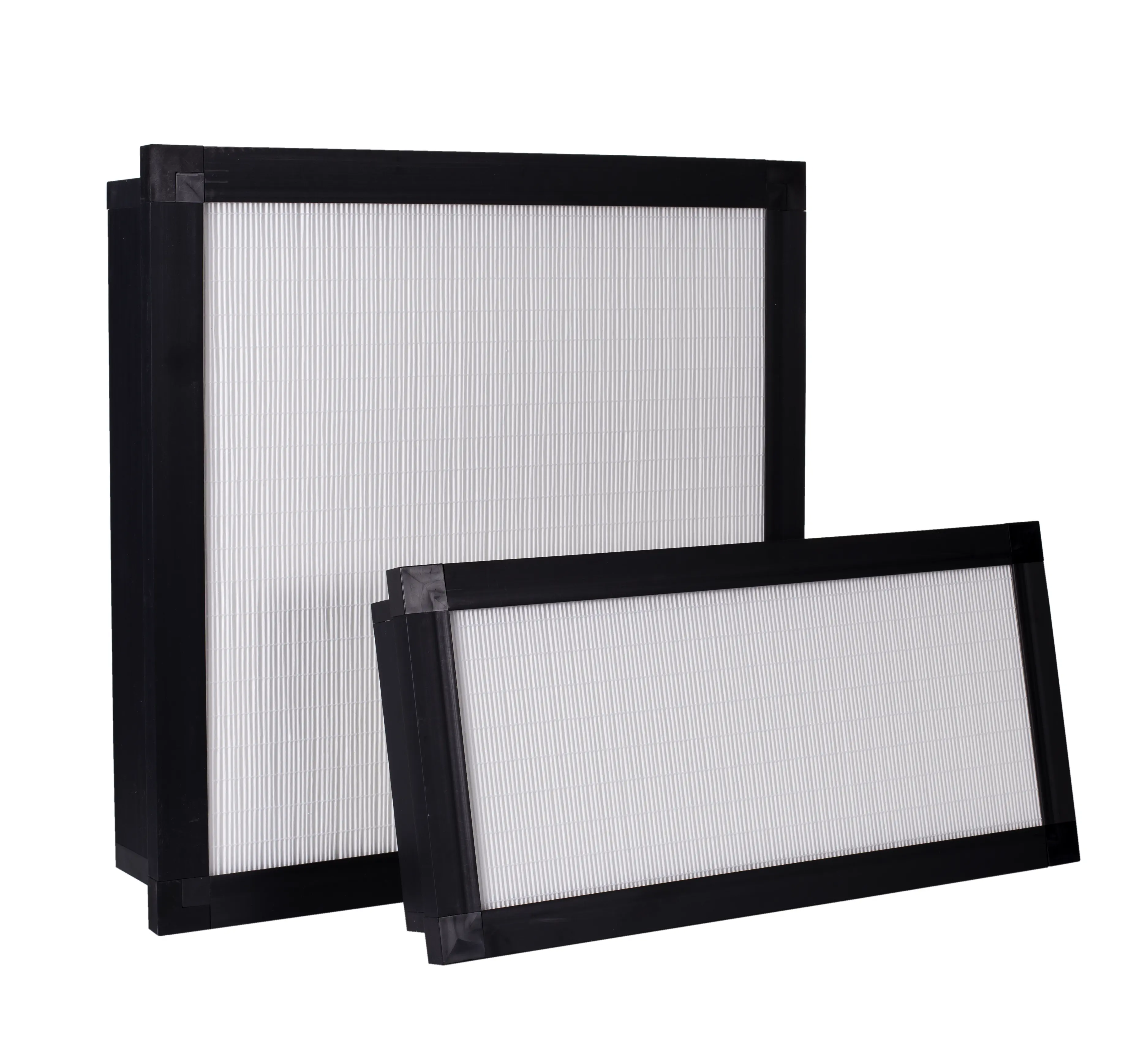
Rigid Filters
Safe Air Rigid Filters offer high-performance, durable filtration solutions for various industrial and commercial settings.
Check out the productA panel filter is a flat filter in a shallow frame. It is the format to use where the housing has little depth, and the usual choice for pre-filtration at an air intake.
Where Panel Filters Are Used
Pre-filtration. Ahead of a bag, compact or HEPA stage, a panel filter catches the coarse load so the stage behind it lasts longer. This is the cheapest protection available for an expensive filter.
Shallow installations. Where the housing cannot take a deep filter, a panel is often the only format that fits.
Frequent replacement. Panels are inexpensive and quick to change, which suits intakes where the load is heavy and the interval short.
A panel filter has a small media area compared with a bag or compact filter of the same face size. That means a shorter interval to the final pressure drop at the same airflow. It is a pre-filter or a shallow-housing solution, not a substitute for a main stage.
Frame and Format
Galvanised steel frames suit higher temperatures and repeated handling. Plastic frames are lighter and lower in cost for dry, moderate-temperature installations. Confirm the operating temperature before specifying a plastic frame.
Flat and pleated formats differ in media area: a pleated panel packs more media into the same face and depth, giving a lower initial pressure drop at the same airflow. See galvanised frame panels, plastic frame panels and flat type filters for the current range, and cassette filters for the cassette format.
Class Selection
Panel filters are specified under EN ISO 16890, usually as ISO Coarse or ISO ePM10. The former EN 779 labels G3 and G4 still appear in specifications; EN 779 was withdrawn on 11 July 2018 and the two standards do not convert one to one.
One point matters for the coarse range in particular. Under EN 779 the coarse classes were measured by gravimetric arrestance — how many grams of synthetic dust the filter held, not which particle sizes it captured. A filter could retain a lot of dust by weight and still pass most of the fine particles. ISO 16890 reports efficiency against real atmospheric fractions instead, which is why an old G4 label and an ISO Coarse value are not interchangeable statements.
What We Need to Quote
Required class or application · width × height × depth with units · whether those are filter or housing dimensions · design airflow per filter with units · frame material, or the operating temperature that determines it · acceptable initial pressure drop · quantity and estimated annual quantity · destination country.