What Does a HEPA Filter Do?
HEPA filters are designed to capture fine airborne particles and improve air quality in HVAC systems, cleanrooms, laboratories, healthcare facilities, pharmaceutical environments and industrial ventilation systems. Whether the goal is to upgrade an air handling system, improve indoor air quality or specify filters for a controlled environment, understanding what a HEPA filter actually does is essential.
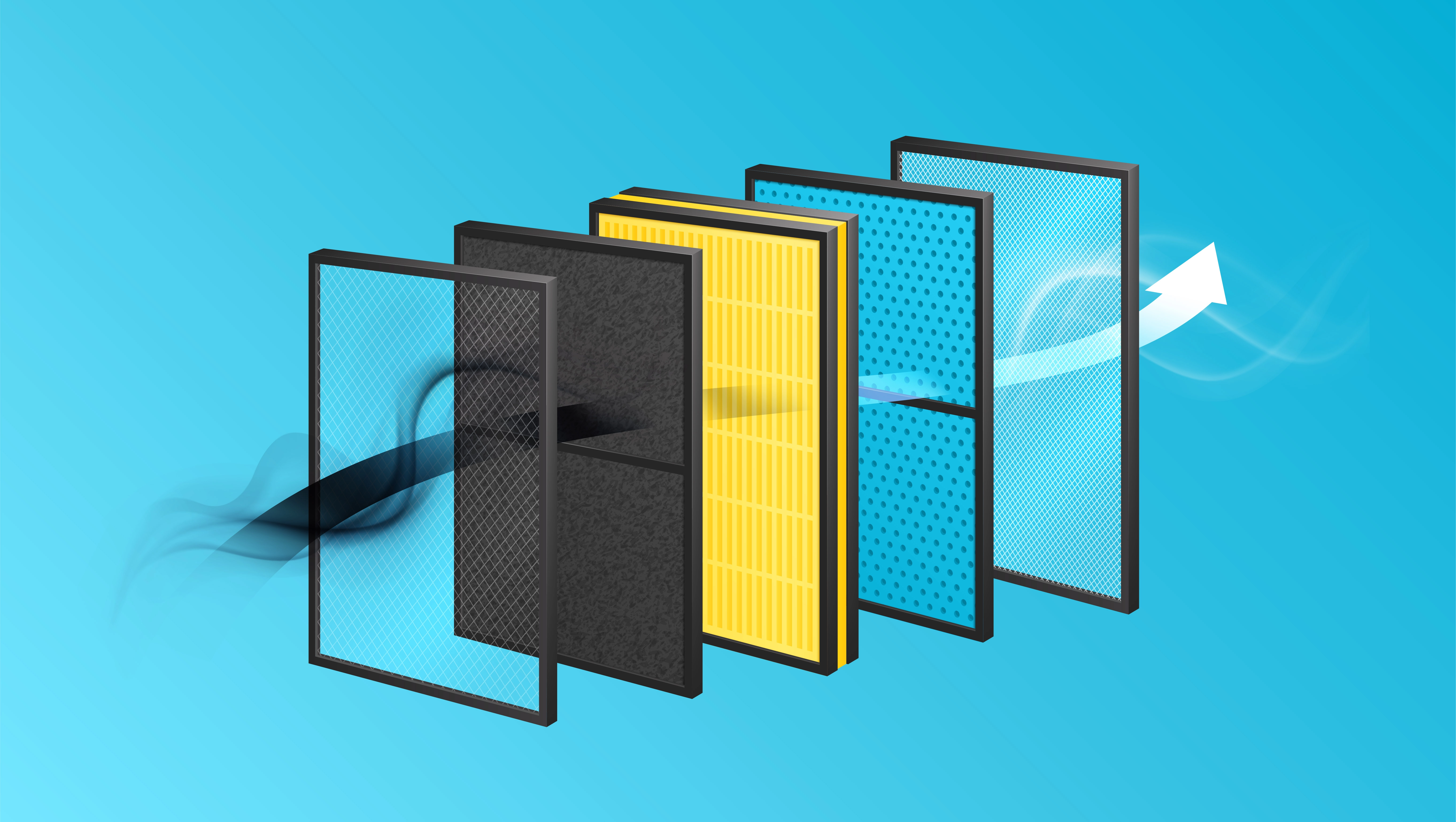
A HEPA filter works by forcing air through a dense fibrous media. As air passes through this media, particles are captured by different filtration mechanisms. This makes HEPA filtration suitable for applications where high-efficiency particle retention is required.
How HEPA Filters Work
HEPA filters capture airborne particles through a combination of interception, impaction and diffusion. Larger particles are trapped as they collide with filter fibers, while smaller particles move irregularly within the airflow and are captured by the fiber structure.
The 0.3-micron particle size is commonly used as an important reference point in HEPA filter performance. This size is associated with the most penetrating particle size, also known as MPPS, which is one of the most difficult particle sizes for a filter to capture. Particles smaller or larger than this range may be captured through different mechanisms depending on the filter media and airflow conditions.
What Types of Particles Can HEPA Filters Capture?
HEPA filters are used to reduce many common airborne particles found in indoor and industrial environments. Depending on the application and filter class, they can help capture:
- Pollen
- Fine dust
- Mold spores
- Pet dander
- Smoke particles
- Airborne particles generated by people, processes or ventilation systems
This makes HEPA filters useful in areas where particle control, air hygiene and system protection are important.
Benefits for Allergy and Asthma-Sensitive Environments
HEPA filtration can help reduce airborne allergens such as pollen, dust and pet dander. In indoor environments, this may support better air quality and help reduce exposure to particles that can trigger allergy or asthma-related discomfort.
HEPA filters should be considered as part of a broader indoor air quality strategy. Source control, proper ventilation, regular cleaning and suitable filter maintenance are also important for reducing airborne allergen levels.
What About Viruses and Bacteria?
HEPA filters are particle filters. While some microorganisms may be very small, they are often carried in droplets, aerosols or particles that can be captured by high-efficiency filtration systems. For this reason, HEPA filters are commonly used in healthcare, laboratory and controlled ventilation applications.
However, HEPA filters should not be treated as the only solution for infection control. In critical environments, filtration should be evaluated together with ventilation design, airflow direction, air changes, maintenance and hygiene procedures.
Understanding HEPA Filter Ratings
HEPA filters are selected according to efficiency class, application area and system requirements. In professional filtration projects, it is important to distinguish between general high-efficiency filters and certified HEPA filter classes.
- H10–H12 filter levels: Used for lower high-efficiency filtration requirements depending on the standard and application.
- H13 HEPA filters: Commonly selected for cleanrooms, HVAC systems, healthcare areas and industrial applications requiring high particle retention.
- H14 HEPA filters: Preferred for more critical applications where a higher filtration level is required.
When selecting a HEPA filter, vague terms such as “HEPA-type” or “HEPA-like” should not be enough for technical purchasing. Filter class, test information, airflow, pressure drop, frame material and sealing type should be reviewed before ordering.
Maintenance Is Essential for HEPA Filter Performance
HEPA filters require regular inspection and timely replacement. As particles accumulate in the filter media, pressure drop increases and airflow may decrease. If the filter is not replaced at the correct time, system performance and energy efficiency may be affected.
- Monitor pressure drop across the filter.
- Replace filters according to operating conditions and system requirements.
- Check the sealing area to prevent bypass leakage.
- Use appropriate pre-filtration to extend HEPA filter service life.
- Select filters according to airflow, dimensions and application area.
Safe Air HEPA Filter Solutions
Safe Air manufactures HEPA filters, H13 HEPA filters, H14 HEPA filters, ULPA filters and custom air filters for HVAC systems, cleanrooms, hospitals, laboratories, pharmaceutical facilities and industrial applications. Filters can be produced according to project requirements such as dimensions, airflow, filter class, frame material, gasket type and sealing method.
For businesses and technical purchasing teams, selecting the correct HEPA filter is not only about efficiency. Pressure drop, installation compatibility, maintenance planning and documentation requirements should also be evaluated.
Technical Support and Product Selection
If your project requires high-efficiency filtration for HVAC systems, cleanrooms, pharmaceutical environments or OEM equipment, Safe Air can support you with project-based HEPA filter solutions.